
Search

Everyday Psychology

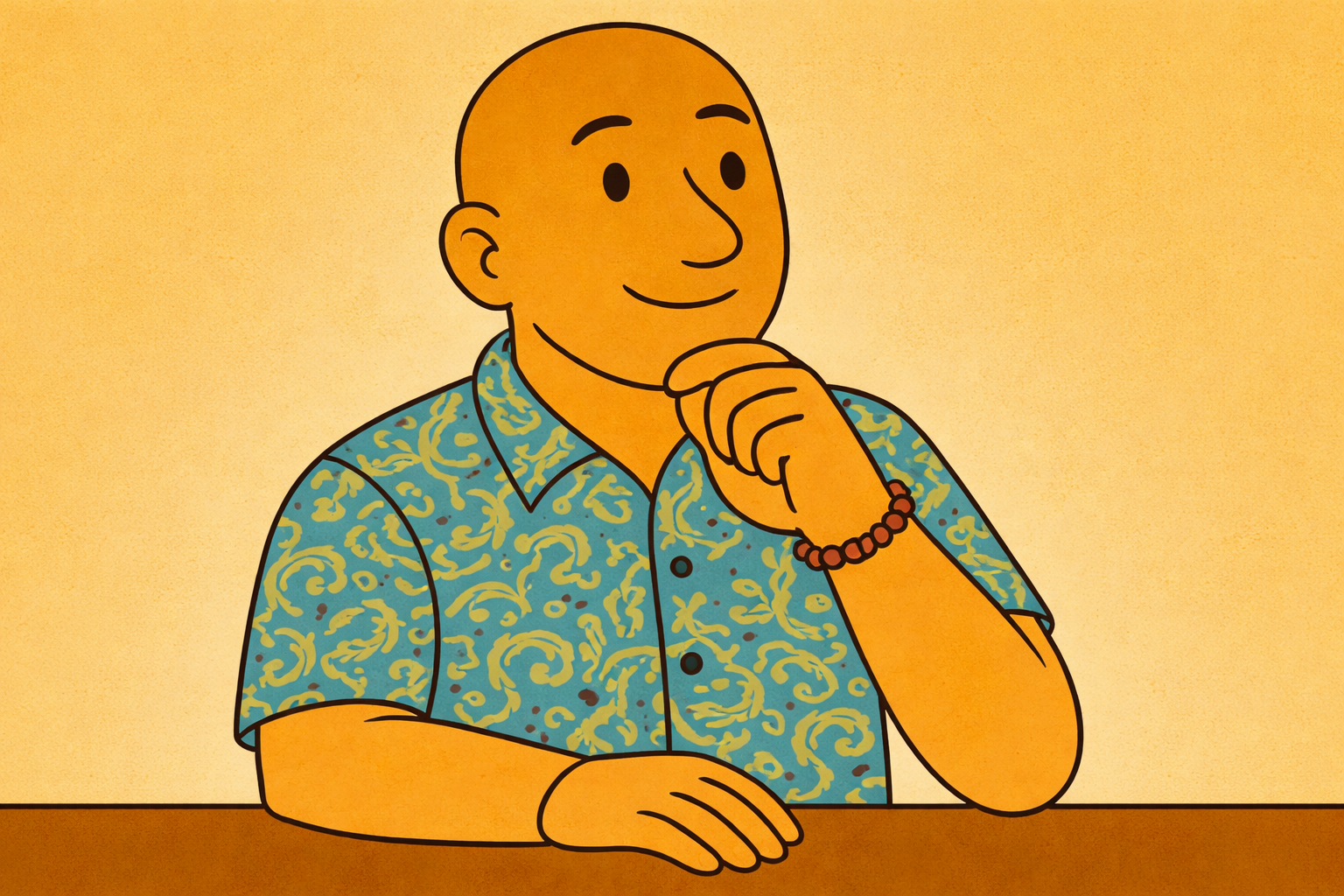
David Hennessy, Clinical Psychologist in Varsity Lakes, Gold Coast, sitting thoughtfully with hand on chin, wearing a blue paisley shirt and bead bracelet, reflecting on how personal narratives influence the nervous system
Everyday Psychology

The Stories We Carry and Their Ongoing Impact on the Nervous System

Our internal narratives continually interact with the nervous system. Evidence-based research shows that intentionally engaging in pleasant and personally meaningful activity can regulate stress responses, improve mood, and gradually balance the story we carry. A practical and realistic approach to emotional regulation from a Clinical Psychologist in Varsity Lakes, Gold Coast.

Read More
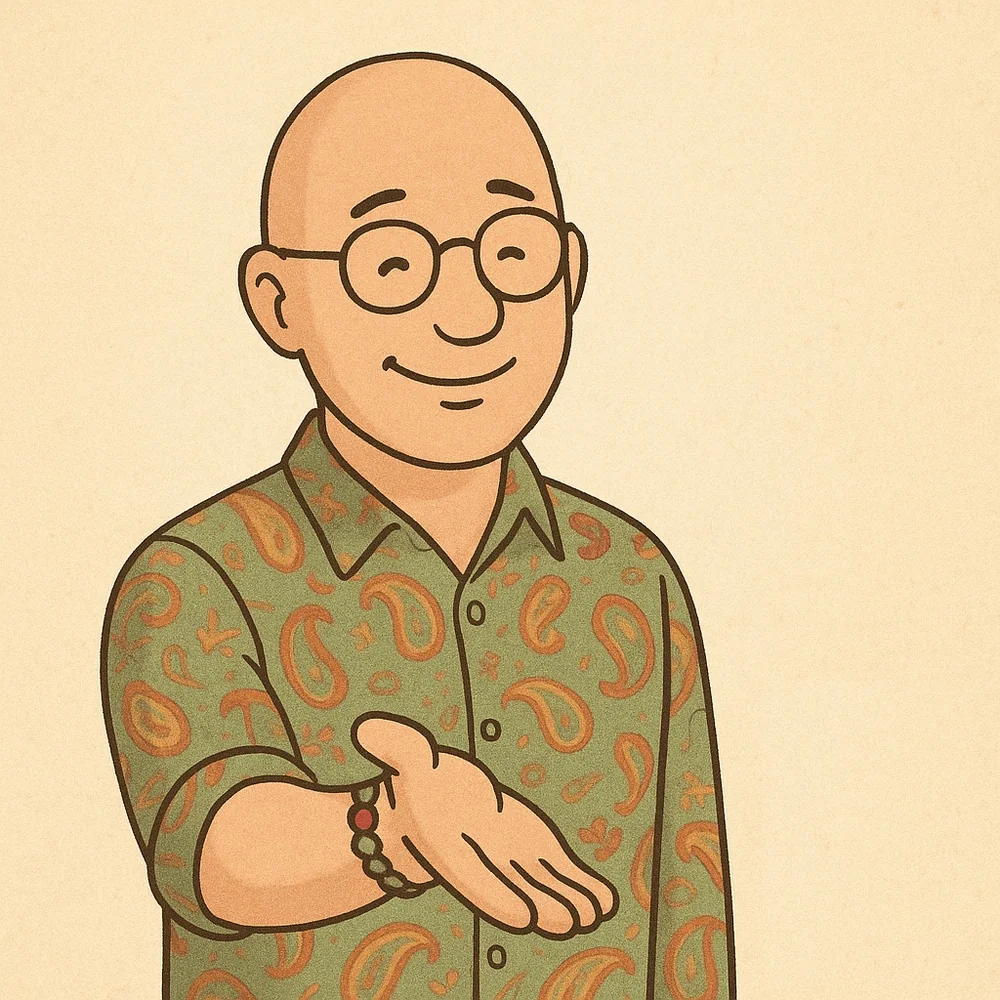
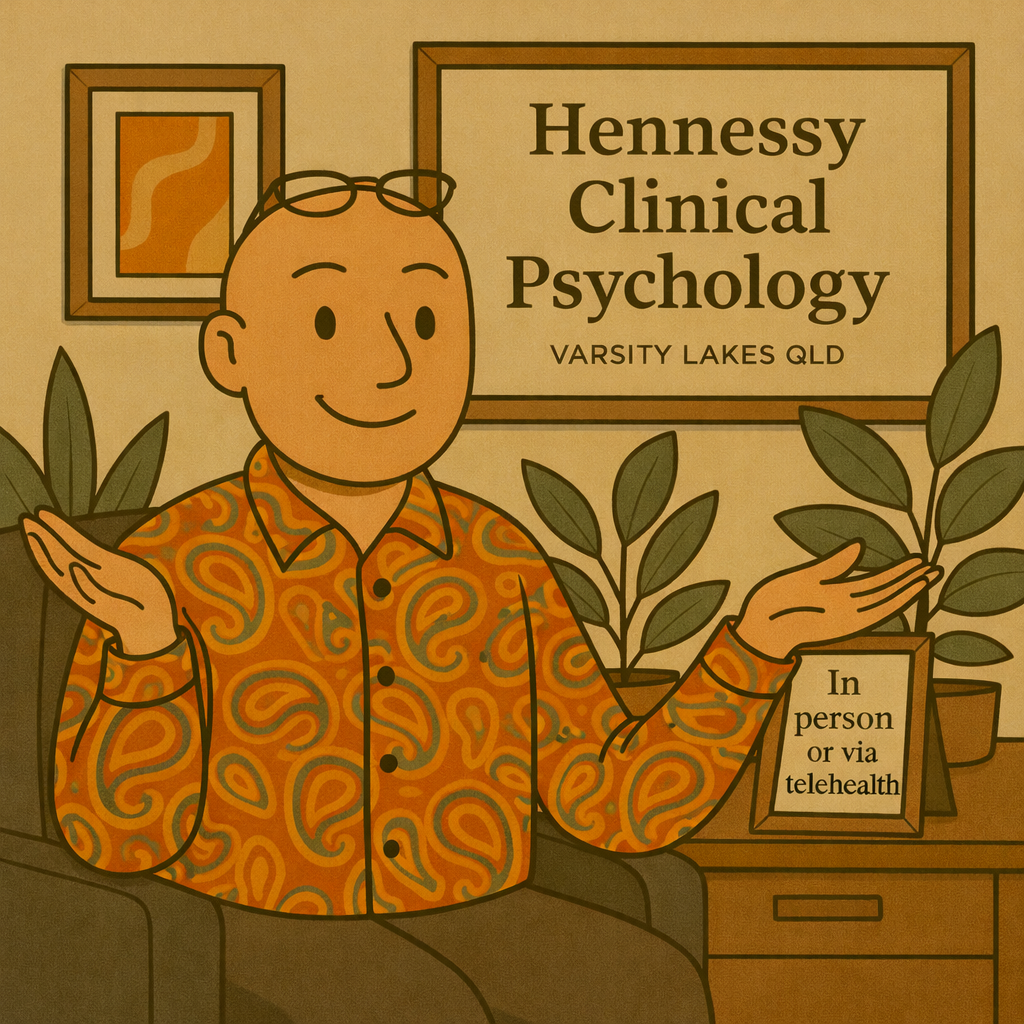
Illustration of David the Psychologist seated in his Varsity Lakes clinic with open hands, representing a firm but fair approach to boundaries and relationships. David the Psychologist @hennessyclinicalpsychology
Everyday Psychology

Firm but Fair: A Healthy Guideline for All Relationships

Firm but fair is a simple yet powerful principle for healthier relationships. Being too nice can lead to resentment, while being not nice enough can damage trust. This post explores a balanced and realistic middle path that supports emotional safety, boundaries, and compassion across everyday relationships.

Read More
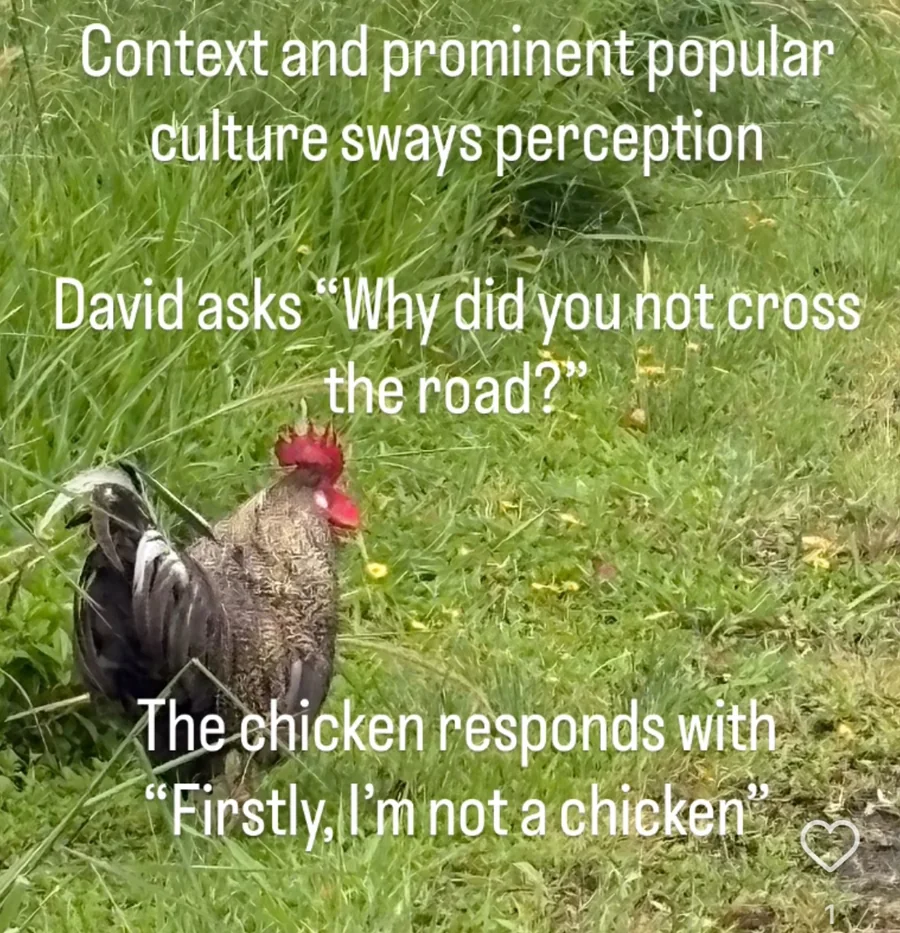
A rooster standing in long grass with white text overlay that reads Context and prominent popular culture sway perception. David asks Why did you not cross the road. The chicken responds with Firstly I am not a chicken. The image illustrates how perception is shaped by context and personal interpretation.
Everyday Psychology

Context And Prominent Popular Culture influence Perception

We all like to believe we see the world objectively, but our brains are constantly shaping personal stories that help us make sense of each moment. This post explores how context and popular culture influence perception and how awareness of this supports psychological wellbeing.

Read More
The Irony of Attachment | David the Psychologist sits calmly beside flowing water and misty mountains, representing the irony of attachment — seeking stability while learning to release grasping through awareness and balance.
Everyday Psychology

The Irony of Attachment

In Buddhist psychology, attachment is clinging — grasping for permanence in a changing world. Clinical Psychologist David Hennessy explains the irony of attachment: how seeking security often creates unease, and how awareness, compassion, and flexibility bring steadiness.

Read More
Gender differences in thought and emotion | Sunlight over a calm ocean with wispy clouds stretching across the blue sky, symbolising reflection, balance, and the shared human experience of thought and emotion.
Everyday Psychology

Gender Differences in Thought and Emotion

Gender differences in thought and emotion are often debated. Are they biological or shaped by culture and learning? Gold Coast clinical psychologist David Hennessy explains the evidence behind small but distinct differences.

Read More