
Applied Psychology for Everyday Life
The Grass Is Always Greener
We often imagine that life is better somewhere else, yet lasting contentment grows from tending to the ground beneath our feet.

We often imagine that life is better somewhere else, yet lasting contentment grows from tending to the ground beneath our feet.
Even small shifts in our emotional state can quietly shape our decisions, what we notice, how we weigh risks, and what feels right. This post explores evidence from psychology and neuroscience showing how subtle mood variations influence everyday judgement and choice.

Most of us would never speak to a friend the way our inner voice sometimes speaks to us. Yet many people quietly live with harsh and critical self-talk. In this post, Clinical Psychologist David Hennessy explores why our inner dialogue becomes so judgmental and how we can transform it. Drawing on the latest evidence from compassion-focused, acceptance-based, and mindfulness approaches, this article explains how self-criticism often begins as protection and how to build a calmer, kinder inner voice.

We’re often kinder to strangers than to loved ones. Evidence shows this comes from attachment, emotion regulation, and learned patterns, not lack of care. Understanding these dynamics helps us respond with awareness, compassion, and respect while distinguishing them from domestic or family violence.

Thoughts are invented within our minds. They help us make meaning through comparisons, ideas, fantasies, and possibilities, but they are not to be taken as unquestioned facts or truths. By observing them with caution and care, we create space to act in ways that align with our values rather than being swept along by fear, desire, habit, or old patterns.
Apples are healthy, but the most important part is not the apple. Real wellbeing comes from values based choices woven into daily life. Preparing food, moving our body, resting well, and connecting with others are simple but powerful actions. Just schedule the basics, do them, repeat, and discover the consistency that supports lasting health
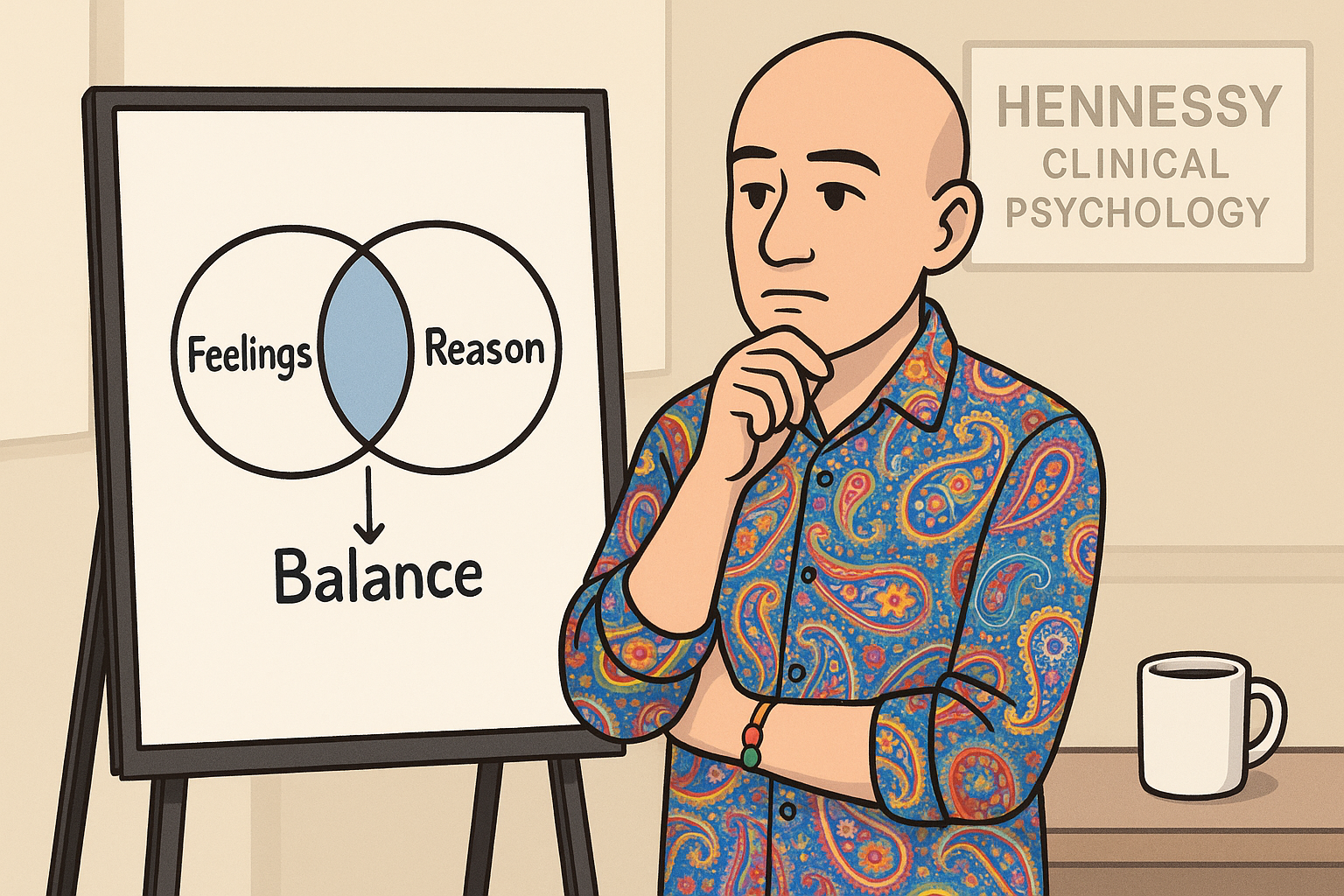
We often think decisions are purely logical. In reality, feelings can influence attention, risk perception, and confidence. Understanding this can support more balanced decision-making.

Comfort and discomfort are constants in life. When adversity is high, noticing beauty does not stop the pain, but it can steady us and support resilience through difficult seasons.
Real growth is not about becoming someone else. It involves understanding ourselves, noticing our patterns, and learning to manage our thoughts, feelings, and responses with intention, awareness, and care.