Psychology and Chronic Pain
By David Hennessy, Clinical Psychologist, Varsity Lakes, Gold Coast, QLD
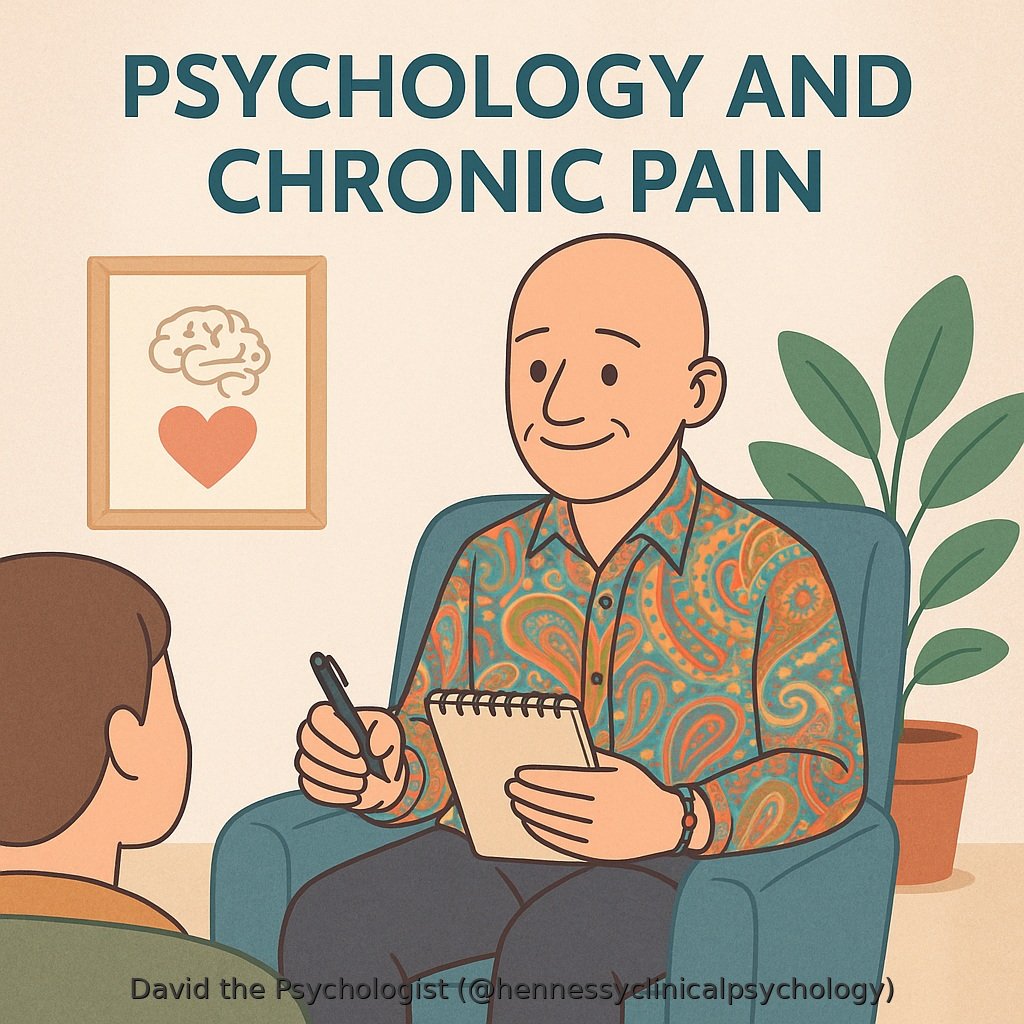
Living with chronic pain can feel like carrying an invisible burden. It impacts sleep, mood, relationships, identity, and hope. Pain is not just physical – it is also a neurological, emotional, and psychological experience. Fortunately, the science of pain has evolved, demonstrating that psychology is a key component in the treatment of chronic pain.
What Is Chronic Pain?
Chronic pain is typically defined as pain lasting longer than 3 to 6 months, beyond normal tissue healing time [1]. It can be caused by injury, illness, surgery, or arise without a clear origin. Over time, pain can become a disorder in itself, with changes in the nervous system contributing to its persistence [2].
Research over the past two decades has also demonstrated that persistent pain frequently involves central sensitisation. In this process, the brain and spinal cord become more sensitive to signals from the body, amplifying pain signals even after tissue healing has occurred [3]. Understanding this helps explain why pain can persist without ongoing structural injury.
The Biopsychosocial Model Of Pain
Modern pain science recognises that chronic pain is influenced by biological, psychological, and social factors working together. This framework is known as the biopsychosocial model [4].
Factors that may influence pain experiences include nervous system sensitivity, emotional distress, sleep disruption, trauma history, beliefs about pain, reduced activity levels, and social isolation. These influences can interact in reinforcing cycles. For example, fear of movement can lead to activity avoidance, which may increase physical deconditioning and emotional distress.
Psychological therapy aims to gently interrupt these cycles while supporting people to reconnect with meaningful activity.
How Psychology Helps
1. Understanding The Pain–Emotion Loop
Emotions and pain share neural pathways. Psychological stress, anxiety, and depression can amplify pain [5]. Cognitive Behavioural Therapy (CBT) is shown to reduce pain intensity and improve function by changing unhelpful thought patterns and behaviours [6].
CBT for chronic pain often focuses on pacing activities, reducing catastrophic thinking, improving sleep patterns, and gradually rebuilding confidence in movement. The interaction between emotional experiences and nervous system activation is also explored in our article on narratives and the nervous system.
2. Acceptance And Self-Compassion
Acceptance and Commitment Therapy (ACT) encourages openness to pain and a focus on values-based living, leading to better functioning and emotional wellbeing [7]. Self-compassion helps reduce guilt and self-blame [8].
Many people living with chronic pain develop harsh internal self-criticism when their body cannot do what it once could. Developing a kinder internal voice can reduce emotional suffering. This theme is explored further in our article discussing why our inner voices can become critical.
3. Regulating The Nervous System
Chronic pain often keeps the nervous system on high alert. Practices like mindfulness, breath work, and Polyvagal-informed techniques help settle this overactivation [9].
Simple grounding practices can support nervous system regulation during periods of distress. These techniques are explored in more detail in our guide to four grounding exercises to help soothe anxiety.
4. Reconnection And Meaningful Action
Chronic pain often shrinks one’s world. Therapy supports gentle re-engagement with relationships, leisure, movement, and purpose aligned with individual values [10]. Rather than waiting for pain to disappear completely, therapy can support people to gradually rebuild valued parts of life.
This idea of reconnecting with meaningful everyday activity is also reflected in our article on mindful self-care and simple daily practices.
Pain, The Brain, And Neuroplasticity
One of the most encouraging discoveries in modern pain science is neuroplasticity – the brain’s capacity to change throughout life [11]. Persistent pain can involve learned neural pathways that continue firing even when tissue injury has healed. However, with new experiences, learning, movement, and emotional safety, these patterns can gradually reorganise.
Australian pain scientist Professor Lorimer Moseley has contributed significantly to pain education research. Studies have shown that understanding how pain works can reduce fear, increase movement, and improve recovery outcomes [12].
A Multidisciplinary Approach
A multidisciplinary approach, involving a team of health professionals, is often necessary for effective chronic pain management. This may include general practitioners, psychologists, pharmacists, physiotherapists, occupational therapists, pain specialists, and occasionally psychiatrists or social workers.
Each member of this team brings a unique perspective. For example, psychologists support emotional wellbeing and coping strategies, while pharmacists help manage and optimise medications. When these professionals work together, they offer coordinated care that addresses chronic pain holistically – physically, emotionally, and socially.
A Whole-Person Approach
At Hennessy Clinical Psychology, we recognise that pain is personal and complex. We support clients through collaborative, values-based, and trauma-informed care.
Therapy may include Cognitive Behavioural Therapy, Acceptance and Commitment Therapy, mindfulness-based approaches, behavioural activation, pacing strategies, and nervous system regulation skills.
David provides psychological therapy for adolescents and adults, recognising that persistent pain can affect people across many stages of life.
You Are Not Making It Up
Chronic pain is real. You are not imagining it, and you deserve support that is respectful, evidence-based, and focused on what matters to you.
With appropriate care, many people learn new ways to reduce suffering, rebuild confidence in their bodies, and reconnect with meaningful aspects of life.
References
- Treede RD et al. Chronic pain as a symptom or a disease. Pain. https://doi.org/10.1097/j.pain.0000000000001384
- Tracey I, Bushnell MC. How neuroimaging studies have challenged us to rethink pain. Journal of Pain. https://doi.org/10.1016/j.jpain.2009.09.014
- Woolf CJ. Central sensitisation. Pain. https://doi.org/10.1016/j.pain.2010.09.030
- Gatchel RJ et al. The biopsychosocial approach to chronic pain. Psychological Bulletin. https://doi.org/10.1037/0033-2909.133.4.581
- Borsook D. Neurological diseases and pain. Pain. https://doi.org/10.1016/j.pain.2012.03.001
- Ehde DM et al. Cognitive behavioural therapy for chronic pain. American Psychologist. https://doi.org/10.1037/a0035747
- Vowles KE, Thompson M. Acceptance and commitment therapy for chronic pain. Pain Management. https://doi.org/10.2217/pmt.11.49
- Wren AA et al. Self-compassion and chronic pain. Pain. https://doi.org/10.1016/j.pain.2011.10.014
- Garland EL et al. Mindfulness-oriented recovery enhancement. Journal of Consulting and Clinical Psychology. https://doi.org/10.1037/a0035798
- McCracken LM, Vowles KE. Acceptance and commitment therapy and mindfulness for chronic pain. American Psychologist. https://doi.org/10.1037/a0035623
- Apkarian AV et al. Towards a theory of chronic pain. Progress in Neurobiology. https://doi.org/10.1016/j.pneurobio.2008.09.018
- Moseley GL. A pain neuromatrix approach to patients with chronic pain. Journal of Pain. https://doi.org/10.1016/S1526-5900(03)00488-7
- Australian and New Zealand College of Anaesthetists & Faculty of Pain Medicine. (2020). Acute Pain Management: Scientific Evidence (5th ed.). https://www.anzca.edu.au/safety-and-advocacy/advocacy/college-publications/acute-pain-management-scientific-evidence
- Australian Government Department of Health. (2021). The National Strategic Action Plan for Pain Management. https://www.health.gov.au/resources/publications/the-national-strategic-action-plan-for-pain-management
Useful Resources:
Frequently Asked Questions
Can A Psychologist Help With Chronic Pain?
Yes. Psychological therapy is widely recognised as an important component of chronic pain treatment. Pain is influenced not only by physical processes but also by emotional, cognitive, and nervous system factors.
Is Chronic Pain All In The Mind?
No. Chronic pain is a genuine biological and neurological experience involving nervous system processes that influence how pain is perceived.
What Psychological Therapies Are Used For Chronic Pain?
Common approaches include Cognitive Behavioural Therapy, Acceptance and Commitment Therapy, mindfulness-based interventions, pacing strategies, and nervous system regulation techniques.
Can Stress Or Trauma Make Pain Worse?
Stress and trauma can increase nervous system sensitivity, which may amplify pain signals.
Can People Recover From Chronic Pain?
Recovery varies between individuals. Many people experience improved functioning and wellbeing through multidisciplinary care.
Enquiries and Appointments
By David Hennessy, Clinical Psychologist, Varsity Lakes, Gold Coast, QLD
We are a Gold Coast Clinical and General Psychologist clinic conveniently positioned in Varsity Lakes.
Therapy is available in person at Varsity Lakes or via telehealth anywhere in Australia.
The easiest way to book an appointment is online.