Fun Friday | Fun Promotes Psychological Well-being
The Psychology of Fun is a Serious Matter
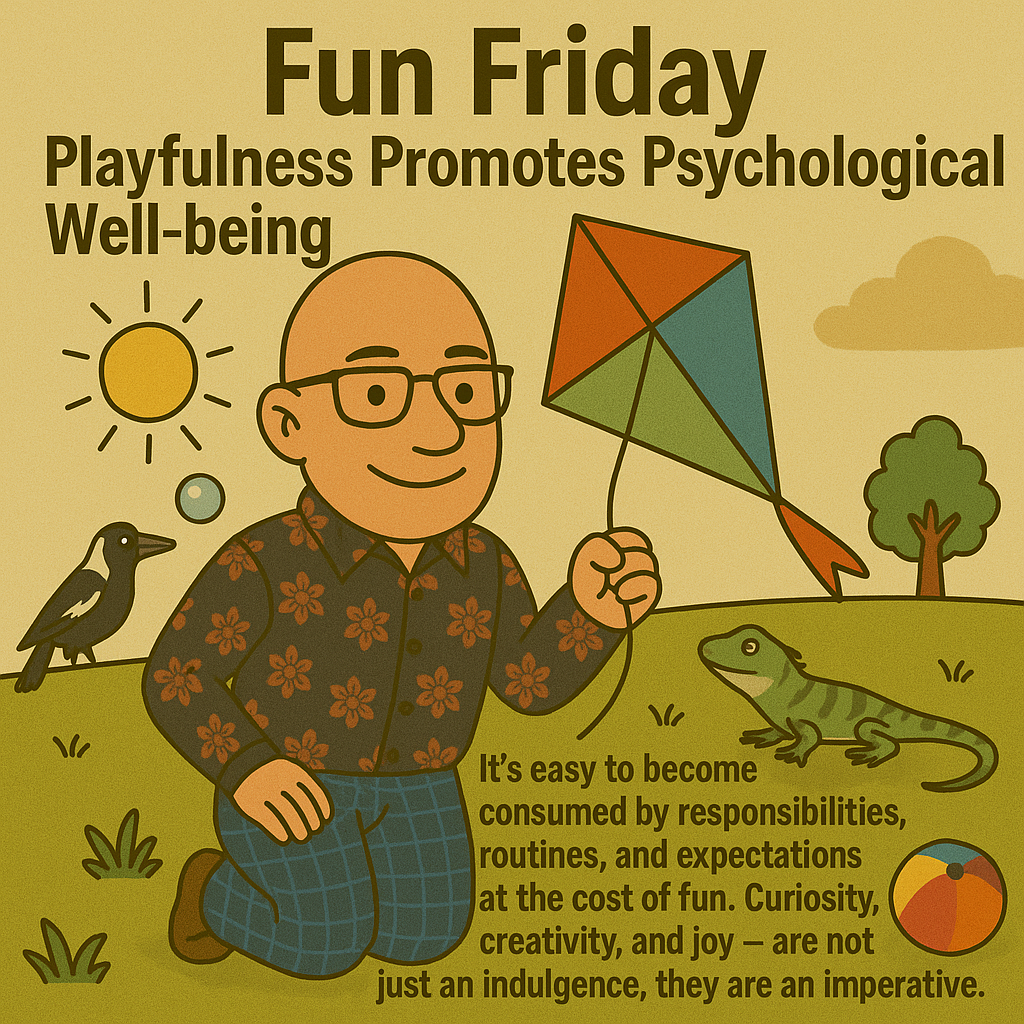
Fun Friday | Psychology of fun. There is a powerful link between fun and psychological well-being. As adults, it is easy to become consumed by responsibilities, routines, and expectations. But nurturing our inner child – the part of us that thrives on curiosity, creativity, and joy – is not just an indulgence.
Research shows that play reduces stress, boosts emotional resilience, enhances problem-solving, and even improves relationships [1][2]. When we allow space for fun, we do not escape life – we reconnect with it more fully.
So on this Fun Friday, give yourself permission to be playful. Whether it is laughing with a friend, drawing, dancing in your kitchen, or kicking a ball at the park, remember:
Fun is not frivolous – it is foundational.
Read more: The Psychology of Fun
Why Fun Supports Psychological Health
From a clinical psychology perspective, play and enjoyment support nervous system regulation, cognitive flexibility, and social connection. These processes matter for all people, across the lifespan, and across a wide range of life challenges. Fun does not replace responsibility or meaningful effort – it complements them.
Related Articles
- Thoughts Are Not Facts
- Values-Based Positive Affirmations
- Let Your Values Be Your Guide
- Understanding Ourselves
Enquiries and Appointments
If you would like to explore how small, sustainable changes – including play, values, and balance – can support your psychological well-being, you are welcome to make an enquiry or book an appointment.
Frequently Asked Questions
Is fun really important for adults?
Yes. Evidence shows that play and enjoyable activities support stress reduction, emotional regulation, creativity, and social connection in adults, not just children [1][2].
Does having fun mean avoiding responsibility?
No. Fun is not about avoidance. It supports recovery, perspective, and resilience, which can improve our capacity to engage with responsibilities.
What if I find it hard to enjoy things?
This is common during periods of stress, low mood, or burnout. Starting small and focusing on gentle, values-consistent activities can be a helpful and realistic first step.
References
- Fredrickson, B. L. (2001). The role of positive emotions in positive psychology: The broaden-and-build theory of positive emotions. American Psychologist, 56(3), 218–226. https://doi.org/10.1037/0003-066X.56.3.218
- Panksepp, J. (2007). Can play diminish ADHD and facilitate the construction of the social brain? Journal of the Canadian Academy of Child and Adolescent Psychiatry, 16(2), 57–66.