Thoughts Are Just Our Minds Making Meaning
By David Hennessy, Clinical Psychologist

Thoughts Are Just Our Minds Making Meaning
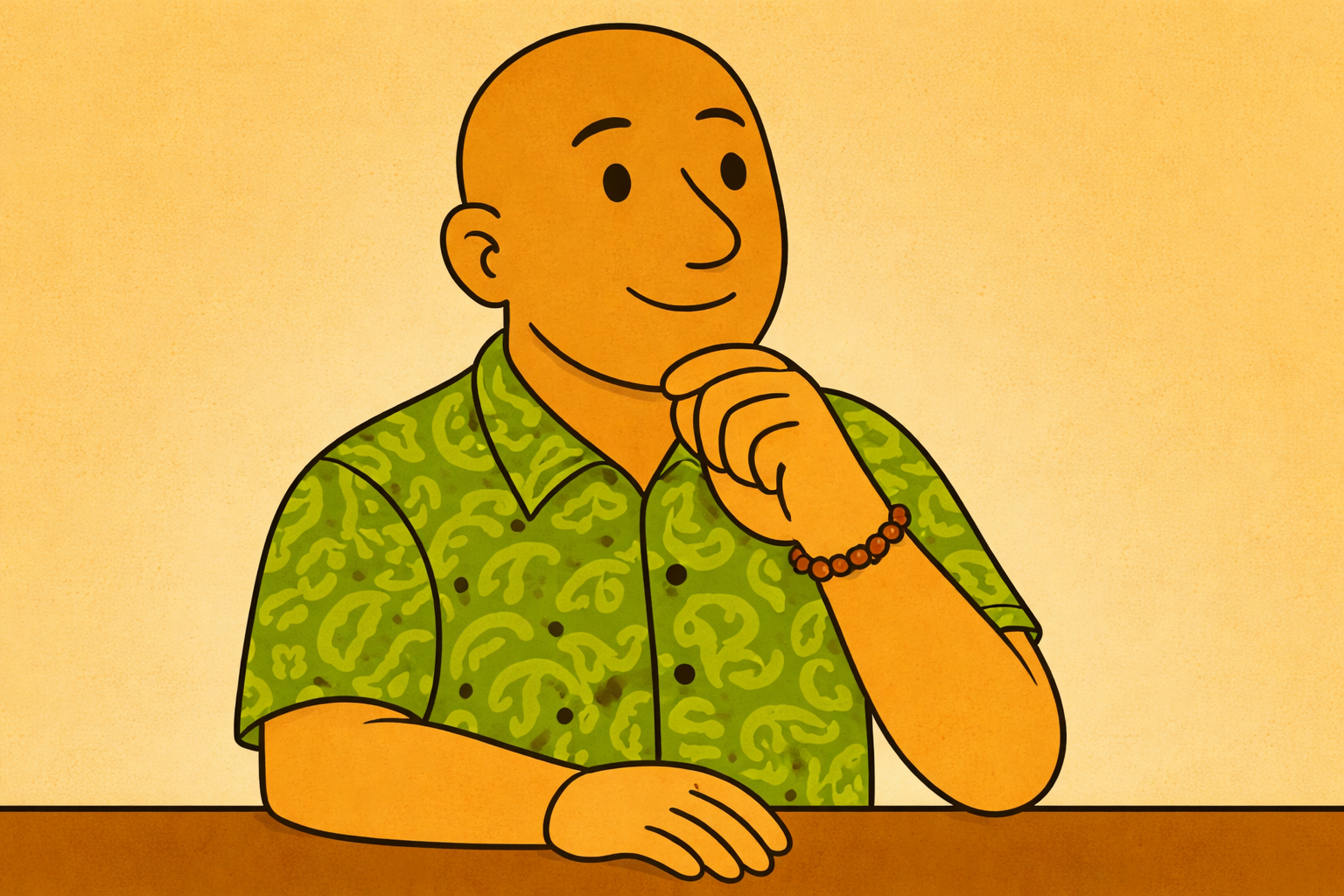
Thoughts are just our minds making meaning: comparisons, images, ideas, fantasies, and hypothetical possibilities. They are the mind’s way of helping us navigate and relate to the ongoing experiences of our lives.
Our mind is a wonderful tool. It allows us to reflect on the past, anticipate the future, and make sense of what is happening in the present. Yet, we need to observe the details swirling around within, whether worries, judgments, or predictions, with caution and care. Thoughts are invented within our minds and are not to be taken as unquestioned facts or truths.
Sometimes, thoughts can be accurate and helpful, guiding us toward values-consistent choices. Other times, fear, desire, habit, or old patterns distort our thoughts and pull us away from what truly matters. When we notice thoughts as mental events rather than unquestioned truths, we create space to choose how to respond.
Why This Matters
Psychological research consistently shows that thoughts are constructions rather than direct reflections of reality. As a result, approaches such as Cognitive Behaviour Therapy and Acceptance and Commitment Therapy emphasise learning to relate differently to thoughts to reduce distress and increase psychological flexibility (1–3).
Importantly, this skill is widely applicable. Whether the mind produces worry, self-criticism, comparison, or imagined future scenarios, the task remains the same. We notice the thought, recognise it as a mental event, and then choose action based on values rather than momentary mental content (3, 4).
Practical Ways to Reduce Attachment to Thoughts
- Practice noticing your thoughts, without judgment (3).
- Practice acknowledging that thoughts are mental events, not facts (2–4).
- Practice noticing where your attention is and returning it to what matters in the moment (3, 5).
Over time, these skills usually develop gradually. For most people, a realistic and repeated practice proves more helpful than trying to change thoughts quickly or forcefully.
Related Articles
Frequently Asked Questions
Are Thoughts Always Inaccurate or Unhelpful?
No. Thoughts can be accurate and useful. The key issue is not whether thoughts appear, but how strongly we treat them as unquestioned facts or truths, particularly when they increase distress or narrow behaviour (1, 2).
What Does It Mean to Observe Thoughts With Caution and Care?
Observing thoughts with caution and care involves noticing them without immediately believing them, arguing with them, or acting on them. This stance allows space for more deliberate, values-consistent responses rather than automatic reactions (3, 4).
Is This Approach Evidence-Based?
Yes. Cognitive Behaviour Therapy, Mindfulness-Based Cognitive Therapy, and Acceptance and Commitment Therapy all include well-established, evidence-based methods that focus on changing how people relate to thoughts rather than attempting to eliminate them (2–5).
Can This Help With Anxiety or Low Mood?
Often, yes. Research suggests that learning to relate differently to thoughts can reduce worry, rumination, and avoidance behaviours that commonly maintain anxiety and low mood over time (4, 5).
References
- Beck, A. T. (1976). Cognitive therapy and the emotional disorders. International Universities Press.
- Hayes, S. C., Strosahl, K. D., & Wilson, K. G. (2011). Acceptance and commitment therapy: The process and practice of mindful change (2nd ed.). Guilford Press.
- Segal, Z. V., Williams, J. M. G., & Teasdale, J. D. (2018). Mindfulness-based cognitive therapy for depression (2nd ed.). Guilford Press.
- Kashdan, T. B., & Rottenberg, J. (2010). Psychological flexibility as a fundamental aspect of health. Clinical Psychology Review, 30(7), 865–878. https://doi.org/10.1016/j.cpr.2010.03.001
- Hofmann, S. G., Sawyer, A. T., Witt, A. A., & Oh, D. (2010). The effect of mindfulness-based therapy on anxiety and depression. Journal of Consulting and Clinical Psychology, 78(2), 169–183. https://doi.org/10.1037/a0018555
Enquiries and Appointments
We are a Gold Coast Clinical and General Psychologist clinic conveniently positioned in Varsity Lakes.
Therapy is available in person at Varsity Lakes or via telehealth anywhere in Australia.
The easiest way to book an appointment is online.