
THERAPY FOR ANXIETY
Anxiety is a normal human response to stress or perceived threat. When it becomes persistent, overwhelming or begins to interfere with daily life, it can feel exhausting and isolating.
Therapy can help you understand your experience of anxiety, develop skills to manage its effects and reduce its impact on day-to-day functioning.
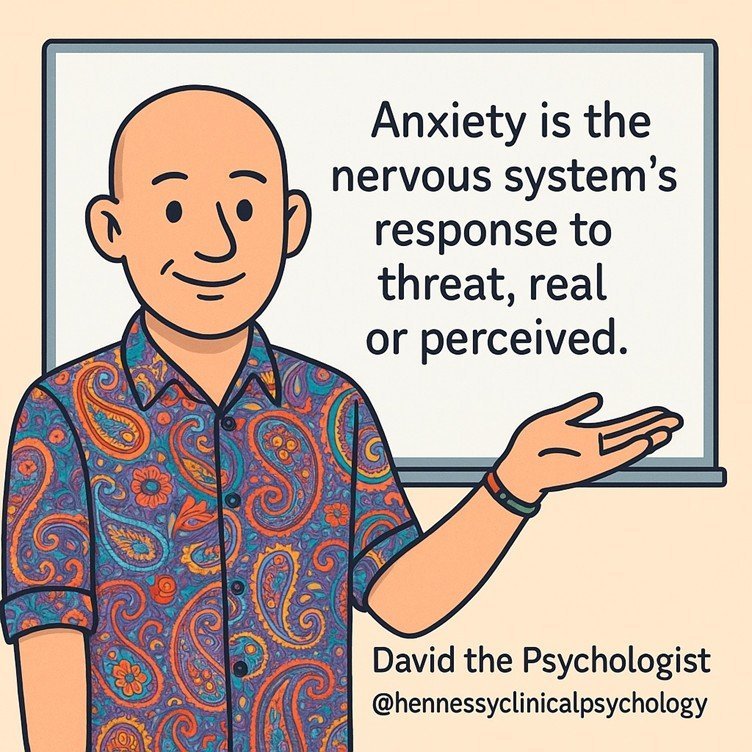
Anxiety is a normal human response to stress or perceived threat. When it becomes persistent, overwhelming or begins to interfere with daily life, it can feel exhausting and isolating. Many people experience extended periods of heightened anxiety and often carry it silently.
Anxiety can involve heightened threat sensitivity and changes across brain and nervous system networks involved in attention, emotion and physiological arousal [1].
Therapy can help you understand your experience of anxiety, develop skills to manage its effects and gently reduce its impact on day-to-day functioning.
Whether these experiences are new or long-standing, support is available.
At Hennessy Clinical Psychology in Varsity Lakes, therapy provides a supportive space to explore and address anxiety at a pace that suits you. Therapy is tailored to your needs and life experiences.
CBT helps identify and change unhelpful thoughts and behaviours that contribute to anxiety. It is one of the most extensively researched psychological treatments across anxiety presentations [2].
ACT supports you to respond more flexibly to anxious thoughts and feelings through acceptance, mindfulness and action based on what matters most to you [3].
Compassion Focused Therapy may help when anxiety is accompanied by shame, harsh self-criticism or a strong internal threat response. It aims to cultivate a steadier and more compassionate way of relating to difficult experiences.
Mindfulness approaches promote present-moment awareness and may help people disengage from repetitive worry and respond more deliberately to anxious thoughts and bodily sensations [4].
Trauma-informed care may be relevant when anxiety is connected to past adverse experiences. The pace and focus of therapy are adapted to safety, readiness, preferences and individual needs.
These educational articles provide more specific information about anxiety experiences and practical psychological strategies.
Learn how generalised anxiety may affect thoughts, emotions, bodily sensations, sleep and day-to-day functioning.
Explore how social anxiety may affect self-consciousness, avoidance, relationships and participation.
Learn about intrusive thoughts, compulsions, uncertainty and the lived experience of OCD.
Try four practical grounding exercises that may help during periods of heightened anxiety or distress.
Follow a brief mindful breathing exercise designed to support calm attention and nervous system settling.
Therapy is not about removing anxiety completely. Some level of anxiety is natural and protective. Instead, therapy focuses on reducing its intensity, improving your ability to cope and supporting you to live with greater confidence, stability and self-understanding.
Over time, many people describe:
Therapy provides support, structure and a safe place to explore your experiences so you can move from feeling overwhelmed to feeling more capable, grounded and connected.
Hennessy Clinical Psychology is located in Varsity Lakes on the Gold Coast. Therapy is available in person or via secure telehealth anywhere in Australia. When appropriate, walk-and-talk sessions may also be available around Lake Orr.
Reaching out for support can be a meaningful step. If anxiety is affecting your life, you do not need to face it alone.
These pages connect this broad anxiety service with the parent Anxiety Disorders hub, a condition-specific GAD service and current appointment information.
Explore all anxiety-related psychology services and educational articles.
Read about psychological support for persistent worry and generalised anxiety.
View current appointment availability, funding information and in-person or telehealth options.
Common questions about therapy for anxiety.
No. Many people seek support because worry, physical anxiety, avoidance, sleep difficulties or fear are affecting daily life, even when they do not have a formal diagnosis.
Therapy may draw on CBT, ACT, compassion-focused, mindfulness-based and trauma-informed approaches, depending on your needs, preferences and formulation.
This page focuses on psychological therapy for anxiety. The Anxiety Disorders hub provides broader navigation to condition-specific services and educational articles.
No. Anxiety is a natural and sometimes protective response. Therapy aims to reduce distress and interference while strengthening flexible and effective coping.
Yes. Therapy is available in person at Varsity Lakes on the Gold Coast or via secure telehealth anywhere in Australia.
Therapy for anxiety is available for adolescents and adults in person at Varsity Lakes on the Gold Coast and via secure telehealth across Australia.
For current availability, appointment types and funding information, visit the Appointment Availability page.
This practice is not a crisis service.
If you require immediate assistance, call 000. For crisis support, contact Lifeline on 13 11 14.
© 2021–2026 Hennessy Clinical Psychology. All rights reserved.