The Grass Is Always Greener
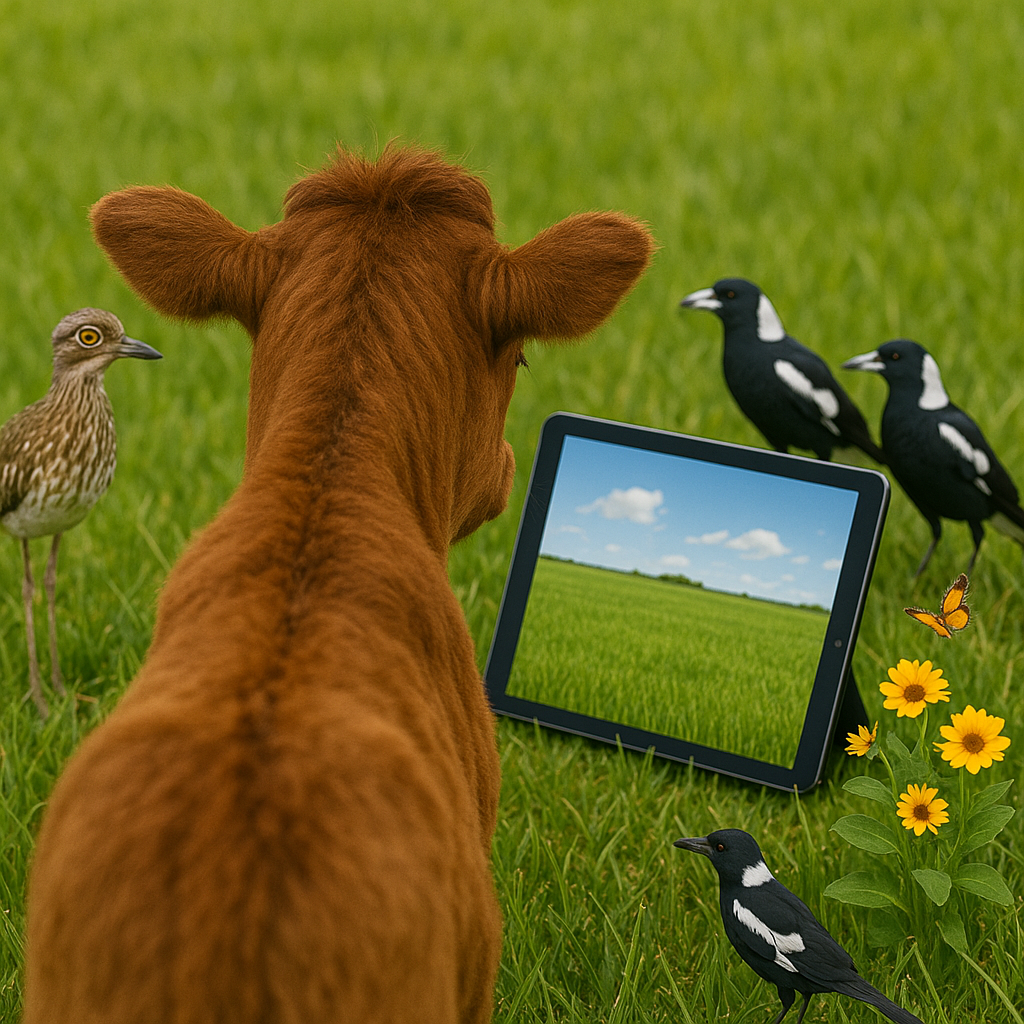
A playful reminder that the grass only seems greener on the other side. True contentment comes from nurturing the ground beneath us.
But this mindset can quietly erode contentment. When we constantly look outward, we miss what is already within reach. That imagined “greener” place can become a moving target, always shifting just beyond our current situation.
Why We Think the Grass Is Greener
Psychologically, this tendency is linked to social comparison and hedonic adaptation. We naturally compare ourselves to others to assess how we are doing [1] [2]. Through social media, these comparisons are amplified and can lower self-esteem or increase envy and dissatisfaction [3] [4].
Even when we achieve something we once desired, we quickly adapt and start wanting more [5] [6]. The initial satisfaction fades as the new situation becomes normal. This is known as hedonic adaptation, a cycle that keeps us chasing the next thing rather than appreciating the present [7] [8].
Reality: Every Lawn Has Its Weeds
What we see of others, especially through social media or surface interactions, is often curated. It is the highlight reel, not the full story [3]. The neighbour’s lawn may look lush, but up close, it too has patches and weeds.
The truth is, every person carries private struggles and imperfections. Recognising this helps soften comparison and increase compassion for ourselves and others.
Turning Attention Back to Our Own Side
Contentment grows when we nurture the patch we are standing on. This means:
- Practising gratitude for what we already have [9] [10]
- Tending to small, meaningful daily actions that align with our values
- Allowing curiosity rather than envy when we see others’ successes
- Remembering that growth takes watering, sunlight, and time in every life
Gratitude practices have been shown to improve wellbeing and even physical health, reinforcing that appreciation, rather than comparison, sustains long term satisfaction [9] [10].
A More Balanced Perspective
Instead of wondering if the grass is greener elsewhere, we might ask, “What can I do to care for the ground I am on?” It is rarely about the lawn itself, but the care we give it.
The greenness is perspective and will be enriched when we cultivate our own garden with attention, compassion, and persistence.
Related Articles
Frequently Asked Questions
Is comparing ourselves to others always harmful?
Social comparison is a normal human process. It becomes unhelpful when it dominates attention or consistently undermines self-worth.
Why does social media increase comparison?
Social media often presents curated highlights rather than everyday reality. This can distort perception and increase dissatisfaction.
Can gratitude really improve wellbeing?
Research shows that consistent gratitude practices are associated with improvements in psychological wellbeing and physical health.
References
- Festinger, L. (1954). A theory of social comparison processes. Human Relations, 7(2), 117 to 140. https://doi.org/10.1177/001872675400700202
- Crusius, J., Corcoran, K., & Mussweiler, T. (2023). Relativity in social cognition. European Review of Social Psychology, 34(1), 1 to 44. https://doi.org/10.1080/10463283.2022.2161043
- Meier, A., & Johnson, B. K. (2022). Social comparison and envy on social media. Current Opinion in Psychology, 45, 101302. https://doi.org/10.1016/j.copsyc.2022.101302
- Kross, E., et al. (2013). Facebook use predicts declines in subjective wellbeing. PLOS ONE, 8(8), e69841. https://doi.org/10.1371/journal.pone.0069841
- Klausen, S. H., et al. (2021). Hedonic adaptation. Philosophical Psychology, 34(2), 253 to 278. https://doi.org/10.1080/09515089.2021.1967308
- Diener, E., et al. (2006). Beyond the hedonic treadmill. American Psychologist, 61(4), 305 to 314. https://doi.org/10.1037/0003-066X.61.4.305
- Killingsworth, M. A. (2021). Income and wellbeing. Proceedings of the National Academy of Sciences, 118(4), e2016976118. https://doi.org/10.1073/pnas.2016976118
- Killingsworth, M. A., et al. (2023). Emotional wellbeing and income. Proceedings of the National Academy of Sciences, 120(11), e2208661120. https://doi.org/10.1073/pnas.2208661120
- Diniz, G., et al. (2023). Gratitude interventions meta analysis. einstein (São Paulo), 21, eRW0371. https://doi.org/10.31744/einstein_journal/2023RW0371
- Boggiss, A. L., et al. (2020). Gratitude and health behaviours. Journal of Psychosomatic Research, 135, 110165. https://doi.org/10.1016/j.jpsychores.2020.110165