
Mindfulness and Self-Compassion Practices for Wellbeing
By David Hennessy, Clinical Psychologist, Varsity Lakes, Gold Coast, QLD
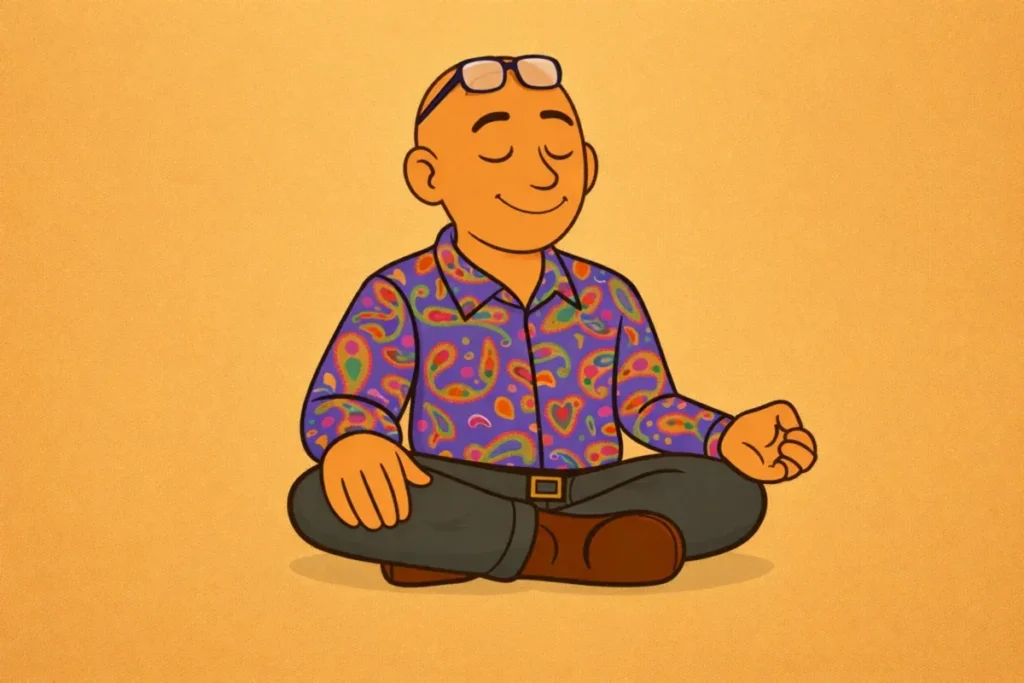
Mindfulness and Self-Compassion Practices for Wellbeing
Mindfulness and self-compassion are well-established psychological constructs with a substantial and growing empirical base. Contemporary psychological therapies frequently integrate mindfulness and self-compassion because they target complementary regulatory processes. Specifically, mindfulness supports awareness of present-moment experience, while self-compassion shapes how people relate to that experience, particularly when distress arises [1, 2].
Importantly, researchers do not define wellbeing as the absence of distress. Instead, they describe wellbeing as the capacity to respond adaptively to internal and external challenges [3]. This understanding aligns with both empirical research and long-term clinical observation across diverse populations.
Mindfulness and self-compassion practices apply to adolescents and adults. Moreover, clinicians can adapt these practices to individual needs, cultural contexts, and different stages of life when they deliver them thoughtfully and at an appropriate pace [2, 4].
This article outlines evidence-based mindfulness and self-compassion practices that people can integrate into everyday life. Clinicians do not position these approaches as cures or quick fixes. Rather, they describe them as skills that develop gradually through consistent and appropriately paced practice [3].
What Is Mindfulness?
Researchers commonly define mindfulness as the intentional, non-judgemental awareness of present-moment experience [1]. This awareness includes thoughts, emotions, bodily sensations, and environmental stimuli as they arise.
From a clinical perspective, mindfulness supports attentional control, emotional regulation, and reduced cognitive reactivity. As a result, these mechanisms help explain observed reductions in anxiety, depression, and general psychological distress [2, 3, 5].
Mindfulness-Based Stress Reduction and Mindfulness-Based Cognitive Therapy remain among the most extensively researched mindfulness-based interventions. Meta-analyses consistently show small-to-moderate effect sizes for reducing psychological distress and preventing depressive relapse, particularly for people with recurrent depression [5, 6].
In addition, related discussions on attentional regulation and environmental engagement appear in The Mental Health Benefits of Nature.
What Is Self-Compassion?
Self-compassion involves responding to personal suffering with care, understanding, and emotional balance rather than harsh self-criticism. Neff’s empirically supported model describes three interacting components [7]:
- Self-kindness – responding to oneself with warmth rather than judgement
- Common humanity – recognising that suffering and imperfection are universal human experiences
- Mindful awareness – holding distress in awareness without over-identifying with it
Self-compassion does not involve avoidance, passivity, or indulgence. Instead, longitudinal and experimental research links higher self-compassion with greater emotional resilience, healthier motivation, and reduced psychopathology [8, 9].
Why Mindfulness and Self-Compassion Support Wellbeing
Persistent self-criticism and threat-based emotional responding strongly relate to anxiety, depression, shame, and burnout [10]. Mindfulness helps people recognise these patterns as they occur. In turn, self-compassion modifies how people respond emotionally to those patterns.
Consequently, meta-analytic evidence shows that self-compassion relates to lower levels of depression, anxiety, and stress, alongside higher wellbeing across both clinical and non-clinical populations [9, 11]. At the same time, compassion-focused interventions reliably reduce shame and self-criticism [10, 12].
Everyday Mindfulness Practices
Mindful Breathing
Brief mindful breathing practices, typically lasting two to five minutes, support attentional regulation and stress reduction when people practise them consistently [1, 3]. Moreover, randomised controlled trials show that these practices support emotion regulation rather than symptom elimination [5].
Mindful Walking
Mindful walking involves sustained attention to bodily sensations associated with movement. For example, research indicates that movement-based mindfulness practices feel more accessible for some people and produce benefits comparable to seated practices [13].
Sensory Grounding
Clinicians commonly use sensory grounding practices to anchor attention in present-moment sensory input. As a result, these approaches help reduce acute anxiety and dissociation in clinical settings [14].
Self-Compassion Practices
Compassionate Self-Talk
Replacing harsh self-criticism with compassionate internal dialogue reduces shame and improves emotional regulation. Accordingly, experimental studies show that self-compassion buffers against stress-related negative affect [8, 9].
Self-Compassion Break
Brief self-compassion exercises that integrate mindfulness, common humanity, and self-kindness reduce emotional distress and physiological stress markers [8, 11].
Soothing Touch
Soothing touch practices draw on affective neuroscience and compassion-focused therapy principles. Consequently, these practices activate affiliative emotional systems and down-regulate threat responses [10, 12].
Integrating Practice Into Daily Life
Evidence suggests that people maintain shorter, more frequent practices more easily than longer, infrequent sessions [3]. For this reason, embedding practices into existing routines supports sustainability.
This principle is explored further in Mindful Self-Care: Simple Things Matter for Wellbeing
When Practice Feels Difficult
However, increased awareness may initially intensify how people experience distressing thoughts or emotions. This response is well documented and does not indicate harm [15].
Earlier relational learning often shapes these experiences. You can read more about this process in What Are Attachment Wounds?.
Frequently Asked Questions
Is mindfulness suitable for everyone?
Mindfulness is broadly applicable. However, some individuals benefit from adapted or guided approaches, particularly when they have a history of trauma or complex mental health concerns [15].
Is self-compassion the same as being easy on yourself?
No. Self-compassion supports emotional responsibility and resilience rather than avoidance [9].
Can mindfulness increase distress initially?
Yes. Increased awareness can temporarily heighten distress. In such situations, pacing and professional guidance are recommended [15].
References
- Kabat-Zinn, J. (1990). Full catastrophe living. Delacorte Press.
- Creswell, J. D. (2017). Mindfulness interventions. Annual Review of Psychology, 68, 491–516. https://doi.org/10.1146/annurev-psych-042716-051139
- Segal, Z. V., Williams, J. M. G., & Teasdale, J. D. (2013). Mindfulness-based cognitive therapy for depression (2nd ed.). Guilford Press.
- Baer, R. A. (2015). Mindfulness-based treatment approaches (2nd ed.). Academic Press.
- Goldberg, S. B., et al. (2018). Mindfulness-based interventions for psychiatric disorders. Clinical Psychology Review, 59, 52–60. https://doi.org/10.1016/j.cpr.2017.10.011
- Kuyken, W., et al. (2016). Efficacy of mindfulness-based cognitive therapy. JAMA Psychiatry, 73(6), 565–574. https://doi.org/10.1001/jamapsychiatry.2016.0076
- Neff, K. D. (2003). Self-compassion. Self and Identity, 2(2), 85–101. https://doi.org/10.1080/15298860309032
- Neff, K. D., & Germer, C. K. (2013). Mindful self-compassion. Journal of Clinical Psychology, 69(1), 28–44. https://doi.org/10.1002/jclp.21923
- MacBeth, A., & Gumley, A. (2012). Self-compassion and psychopathology. Clinical Psychology Review, 32(6), 545–552. https://doi.org/10.1016/j.cpr.2012.06.003
- Gilbert, P. (2010). Compassion-focused therapy. Routledge.
- Ferrari, M., et al. (2019). Self-compassion and wellbeing. Journal of Personality, 87(4), 737–755. https://doi.org/10.1111/jopy.12446
- Kirby, J. N., et al. (2017). Compassion-based interventions. Behavior Therapy, 48(6), 778–792. https://doi.org/10.1016/j.beth.2017.08.003
- Russell, T. A., & Arcuri, S. M. (2015). A neurophysiological and neuropsychological consideration of mindful movement: Clinical and research implications. Frontiers in Human Neuroscience, 9, 282. https://doi.org/10.3389/fnhum.2015.00282
- Najavits, L. M. (2015). The problem of dissociation. Guilford Press.
- Britton, W. B. (2019). Can mindfulness be too much of a good thing? Current Opinion in Psychology, 28, 159–165. https://doi.org/10.1016/j.copsyc.2018.12.011
Enquiries and Appointments
We are a Gold Coast Clinical and General Psychologist clinic conveniently positioned in Varsity Lakes.
Therapy is available in person at Varsity Lakes or via telehealth anywhere in Australia.
The easiest way to book an appointment is online.