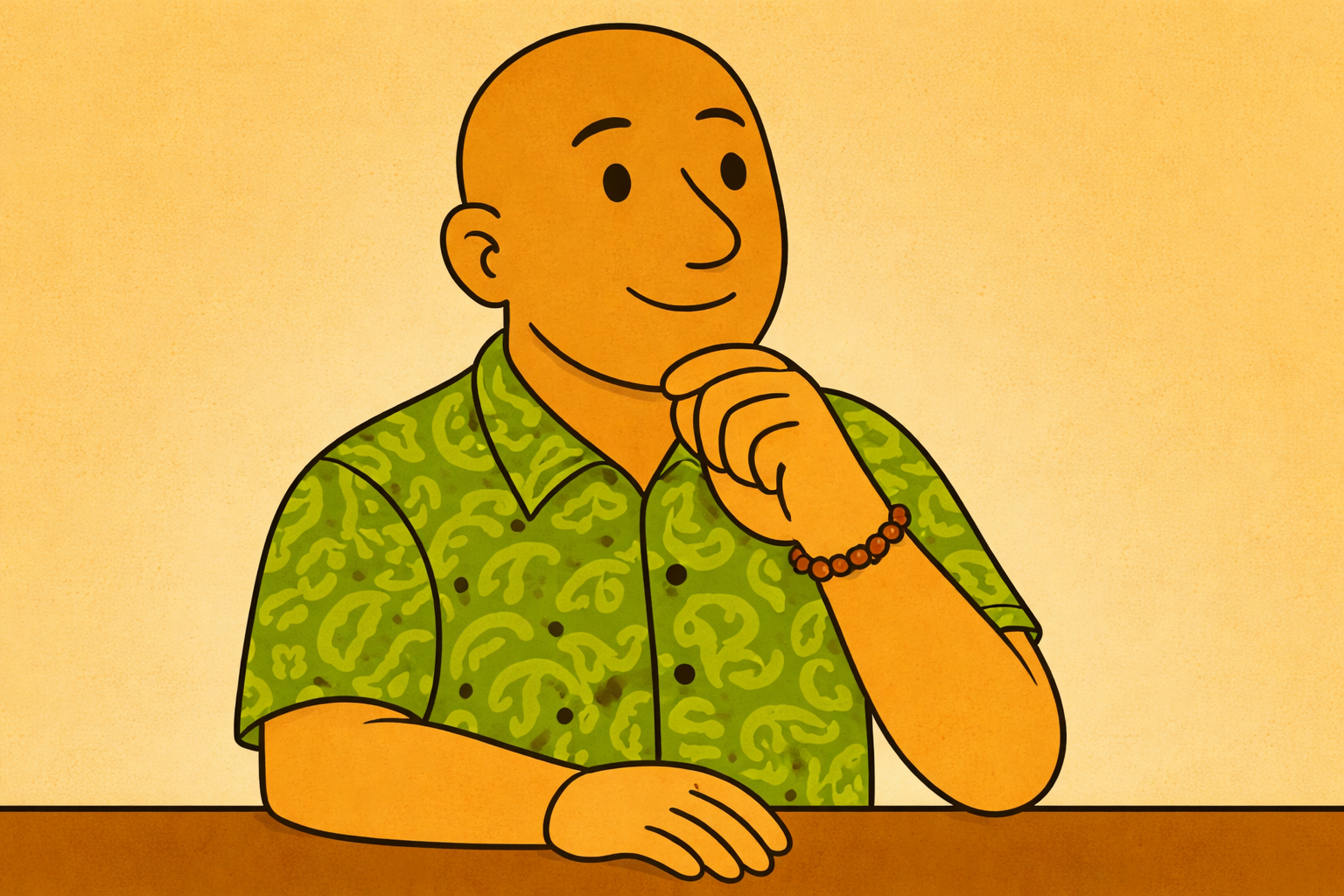
Busy and Serious Often Happen Automatically, but to Be Happy and Healthy Long-Term Takes Conscious, Intentional Effort
By David Hennessy, Clinical Psychologist, Varsity Lakes, Gold Coast, QLD

Busy and Serious Often Happen Automatically, but to Be Happy and Healthy Long-Term Takes Conscious, Intentional Effort
From my experience as a clinical psychologist, and earlier in life as a tradesman working long days under pressure, this pattern shows up across ages, backgrounds, and circumstances. Busyness is easy to fall into. Health and wellbeing are practices that need to be returned to, again and again.
How Busy and Serious Become the Default
Most people do not choose to become chronically busy or emotionally flat. It tends to happen gradually.
- Work expands to fill available time
- Technology keeps attention externally focused
- Stress narrows thinking and priorities
- Rest and play are postponed until things settle down
Over time, the nervous system adapts to operating in a near-constant state of alertness. This can look productive on the outside, yet internally it often comes with fatigue, irritability, low mood, or a sense of disconnection [1, 6].
Importantly, this is not a personal failure. It is a very human response to modern life.
Happiness Is Not Automatic, and That Is Okay
Long-term wellbeing is less about feeling good all the time and more about living in ways that are psychologically nourishing.
- Meaningful relationships
- A sense of purpose or values
- Rhythms of effort and recovery
- Emotional awareness and self-compassion
- Physical movement and rest
These elements rarely happen by accident. They usually require conscious effort, particularly when life is demanding. This aligns closely with principles outlined in What We Value Long-Term Is Not the Same as What We Desire Moment to Moment and broader work on psychological flexibility and values-aligned action [2, 7].
For most people, intentional effort for wellbeing involves small, repeated choices that support psychological health over time rather than quick fixes or constant positivity.
From a clinical perspective, wellbeing is best understood as something we practise, not something we achieve once and then keep forever.
Intentional Effort for Wellbeing
A common misunderstanding is that working on mental health means adding more tasks to an already full life. In practice, it is often the opposite.
- Pausing before automatically saying yes
- Taking a short walk outside
- Having a proper conversation rather than scrolling
- Noticing emotional signals instead of pushing through them
- Making space for small, repeatable habits
These shifts are supported by research on attentional regulation and stress recovery [4, 5]. They are also consistent with the benefits of intentional engagement with the environment and the body, explored further in The Mental Health Benefits of Nature.
Why Intentional Effort for Wellbeing Matters Long-Term
Chronic busyness and emotional suppression are associated with increased risk of anxiety, depression, burnout, and stress-related physical health difficulties [1, 6]. Sustained activation of the stress response system places cumulative strain on psychological and physiological functioning.
Large-scale evidence shows that long-term mental health is supported by intentional self-regulation, basic psychological needs satisfaction, and supportive relationships rather than productivity alone [7, 8].
International guidance from the World Health Organization highlights the importance of intentional self-regulation and recovery in supporting long-term mental wellbeing.
Evidence Snapshot
Contemporary psychological research consistently shows that chronic stress, emotional suppression, and sustained threat activation are associated with poorer long-term mental and physical health outcomes [1, 6]. In contrast, intentional values-based behaviour, self-compassion, and flexible emotion regulation are linked with improved wellbeing, resilience, and psychological functioning across diverse populations [2, 7, 9]. Importantly, research also highlights that wellbeing is highly individual, reinforcing the value of personalised, intentional approaches rather than one-size-fits-all productivity models [8].
A Realistic Clinical Perspective
There will be periods where life must be busy and serious. Parenting, caring roles, illness, financial pressure, and work demands can all legitimately take centre stage.
The aim is not to eliminate seriousness, but to notice when it has quietly taken over everything else. Conscious effort is about rebalancing, not self-criticism.
For many people, therapy becomes a place to slow down, reflect, and re-learn how to live with more awareness and choice rather than constant reaction. This perspective is explored further in Why Are We Kind to Strangers and Mean to Loved Ones?, Surviving in Adversity, and Me Time Improves Work Time.
Seen this way, intentional effort for wellbeing becomes a sustainable practice rather than another demand to get life perfectly right.
Frequently Asked Questions
Is being busy always bad for mental health?
No. Busyness itself is not harmful. Difficulties arise when sustained demand occurs alongside limited recovery and emotional suppression [1, 6].
Why does happiness take conscious effort?
Human attention naturally prioritises threat, urgency, and problem-solving. Wellbeing requires deliberate redirection toward values, connection, and recovery [2, 4, 5].
Does intentional effort mean constant self-improvement?
No. Intentional effort for wellbeing is best understood as gentle, repeatable practices rather than ongoing self-optimisation [7, 9].
Can therapy help with long-term busyness and stress?
Yes. Therapy can support nervous system regulation, clarify values, and help people shift patterns that maintain chronic stress and emotional exhaustion [2, 7, 8].
References
- McEwen, B. S. (2007). Physiology and neurobiology of stress and adaptation. Physiological Reviews, 87(3), 873–904. https://doi.org/10.1152/physrev.00041.2006
- Hayes, S. C., Strosahl, K. D., & Wilson, K. G. (2016). Acceptance and commitment therapy. Guilford Press.
- Gross, J. J., & John, O. P. (2003). Individual differences in emotion regulation. Journal of Personality and Social Psychology, 85(2), 348–362. https://doi.org/10.1037/0022-3514.85.2.348
- Hofmann, S. G., Sawyer, A. T., Witt, A. A., & Oh, D. (2010). Mindfulness-based therapy effects. Journal of Consulting and Clinical Psychology, 78(2), 169–183. https://doi.org/10.1037/a0018555
- Chiesa, A., Serretti, A., & Jakobsen, J. C. (2021). Mindfulness and emotion regulation. Clinical Psychology Review, 84, 101982. https://doi.org/10.1016/j.cpr.2020.101982
- Van der Kolk, B. A., D’Andrea, W., & Spinazzola, J. (2022). Stress and self-regulation. World Psychiatry, 21(1), 35–46. https://doi.org/10.1002/wps.20928
- Ryan, R. M., & Deci, E. L. (2017). Self-determination theory. Guilford Press.
- Fisher, A. J., Medaglia, J. D., & Jeronimus, B. F. (2018). Individualised wellbeing. Proceedings of the National Academy of Sciences, 115(27), E6106–E6115. https://doi.org/10.1073/pnas.1711978115
- Gilbert, P. (2020). Compassion focused therapy. Routledge.
Enquiries and Appointments
We are a Gold Coast Clinical and General Psychologist clinic conveniently positioned in Varsity Lakes.
Therapy is available in person at Varsity Lakes or via telehealth anywhere in Australia.
The easiest way to book an appointment is online.