Psychology and Adult Attention Deficit Disorder (ADHD)
By David Hennessy, Clinical Psychologist, Varsity Lakes, Gold Coast, QLD
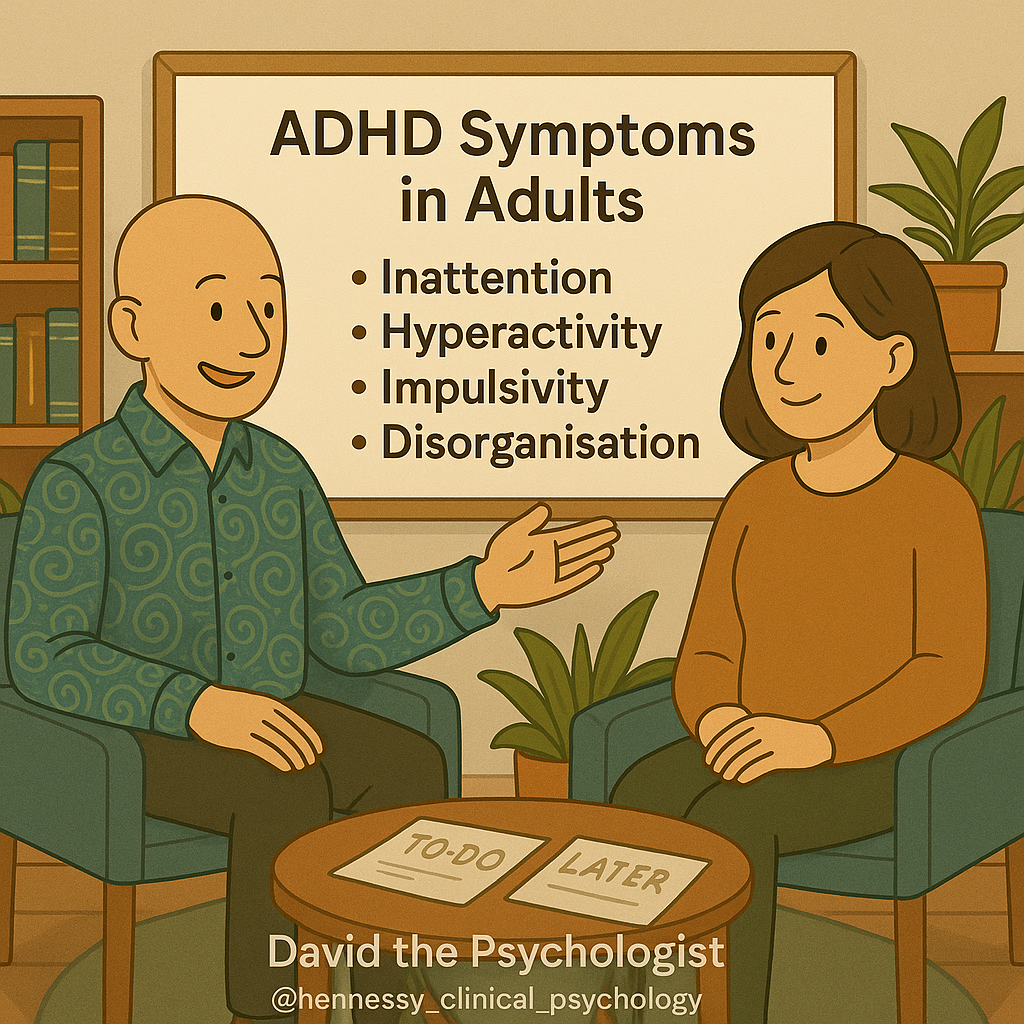
David the Psychologist with a client, exploring symptoms of adult ADHD.
Psychology and Adult ADHD
Living With a Racing Mind: Understanding Adult ADHD
Adult Attention Deficit Hyperactivity Disorder (ADHD) is a neurodevelopmental condition that often persists into adulthood, despite being commonly associated with children. Many adults struggle with symptoms for decades before discovering that ADHD is the underlying issue. For those affected, the realisation can be life-changing and provide both understanding and direction for meaningful change.
Recognising the Signs of Adult ADHD
ADHD in adults presents differently than in childhood. Hyperactivity may lessen, but difficulties with focus, organisation, and emotional regulation can persist or worsen.
Common features include:
Inattention: Easily distracted, forgetful, or frequently misplacing items
Hyperactivity: Feeling restless, fidgety, or having difficulty relaxing
Impulsivity: Interrupting others, rushing decisions, or acting without thinking
Disorganisation: Difficulty planning, following through, or prioritising tasks
These challenges often coexist with strengths such as creativity, intuition, empathy, and high energy, though many adults with ADHD carry years of self-doubt due to repeated misunderstandings of their behaviours and needs.
The Emotional Impact of Unrecognised ADHD
Without understanding their condition, many adults internalise the consequences of their symptoms as personal failings. This can lead to:
Chronic low self-esteem
Burnout from overcompensating
Anxiety, depression, or emotional dysregulation
Difficulties in employment or relationships
It’s not uncommon for clients to say, “I thought I was just lazy” or “I didn’t know other people didn’t feel this overwhelmed all the time.” The diagnosis offers more than a label—it can offer relief and a starting point for tailored support.
Evidence-Based Treatment and Support
ADHD is manageable with the right supports in place. A comprehensive treatment plan might include:
Psychological Therapies
Cognitive behavioural therapy (CBT) adapted for ADHD can assist with time management, task initiation, and emotion regulation.
Mindfulness-based therapies have been shown to reduce impulsivity and increase attention control [1].
Medication
Stimulant medications such as methylphenidate and dexamphetamine are considered first-line treatment [2].
Non-stimulant medications, including atomoxetine and guanfacine, may also be effective [3].
ADHD medication must be prescribed and monitored by a psychiatrist, who will assess the risks and benefits, dosage, and response over time. While psychologists do not prescribe, we often work in collaboration with GPs and psychiatrists to ensure holistic care.
Practical Supports
External reminders, routines, and task management strategies are useful tools.
Coaching or occupational therapy may assist in daily functioning.
Psychoeducation for individuals and families supports understanding and acceptance [4].
Neurodiversity, Not Deficiency
The term “neurodivergent” reminds us that ADHD is a variation in brain functioning—not a character flaw. Understanding ADHD as a form of neurodiversity shifts the narrative from disorder to difference, allowing for self-acceptance and adaptive support strategies. This doesn’t mean ignoring difficulties, but rather approaching them with compassion and skill.
Cairncross, M., & Miller, C. J. (2020). The effectiveness of mindfulness-based therapies for ADHD: A meta-analytic review. Journal of Attention Disorders, 24(5), 627–643. https://doi.org/10.1177/1087054716647478
Bolea-Alamanac, B. M., et al. (2014). Evidence-based guidelines for the pharmacological management of attention deficit hyperactivity disorder. Journal of Psychopharmacology, 28(3), 179–203. https://doi.org/10.1177/0269881113519509
Ramsay, J. R., & Rostain, A. L. (2015). The adult ADHD tool kit: Using CBT to facilitate coping inside and out. New York, NY: Routledge.
FAQ
What is adult ADHD? – Adult ADHD is a neurodevelopmental condition involving persistent patterns of inattention, impulsivity, and/or hyperactivity that affect daily functioning.
Can ADHD be diagnosed later in life? – Yes. While symptoms usually begin in childhood, many adults are only diagnosed later when life demands increase or difficulties become more visible.
Who can diagnose ADHD in Australia? – ADHD may be diagnosed by psychiatrists and, in some contexts, clinical psychologists with appropriate training and assessment tools.
Is medication always required? – No. Medication can be helpful for many people, but therapy, psychoeducation, and practical supports are also key components of care.
Is adult ADHD the same as childhood ADHD? – Adult ADHD often involves less physical hyperactivity and more difficulties with organisation, emotional regulation, and sustained attention.
Enquiries and Appointments
We are a Gold Coast Clinical Psychologist clinic conveniently positioned in Varsity Lakes. Therapy is available in person at Varsity Lakes or anywhere in Australia via telehealth.