What We Value Long-Term Is Not the Same as What We Desire Moment to Moment
By David Hennessy, Clinical Psychologist, Varsity Lakes, Gold Coast, QLD
What We Value Long-Term Is Not the Same as What We Desire Moment to Moment
Many people notice a recurring tension in daily life. In one moment, we want comfort, relief, certainty, or distraction. However, when we pause and reflect, we often recognise that what truly matters over time involves meaning, connection, growth, and integrity.
These two systems of motivation do not operate in the same way. Instead, they frequently pull in different directions. Psychology helps explain why this mismatch occurs and why it represents a common human experience rather than a personal failing.
Short-Term Desire and the Brain
Moment-to-moment desire is closely linked to the brain’s threat and reward systems. These systems operate quickly and automatically. Their primary role is to protect us and reduce distress in the short term.
When discomfort, uncertainty, or emotional pain arises, the nervous system actively seeks rapid relief. Research in affective neuroscience shows that this response supports survival, even though it does not reliably support long-term wellbeing [1].
As a result, behaviours such as avoidance, reassurance seeking, distraction, or impulsive choices often feel compelling. Although these responses may reduce distress temporarily, they do not guide people toward a meaningful life over time.
Values as Long-Term Orienting Principles
Values differ fundamentally from short-term desires. In psychological terms, values represent enduring qualities of action that provide direction rather than outcomes to be achieved.
Acceptance and Commitment Therapy describes values as chosen life directions that people can live moment by moment, regardless of circumstances [2]. For example, values may include being a caring partner, acting with honesty, or contributing to something larger than oneself.
Importantly, values do not guarantee comfort. Instead, acting in line with what matters often involves uncertainty, effort, and emotional exposure. Research indicates that clarity about personal values supports greater psychological flexibility and improved mental health outcomes [3][7].
Why Desire and Values Often Conflict
The conflict between short-term desire and long-term values becomes particularly strong during periods of stress. When pressure increases, the nervous system shifts toward protection. Consequently, immediate relief can feel urgent and necessary.
For example, avoiding a difficult conversation may reduce anxiety today. However, over time, this avoidance can weaken trust. Similarly, choosing distraction instead of rest may feel easier in the moment, yet it can contribute to burnout in the longer term.
From a behavioural perspective, actions that reduce discomfort receive negative reinforcement. As a result, these behaviours become more likely to recur, even when they move a person away from what matters most [4].
Psychological Flexibility and Choice
Contemporary evidence-based therapies do not aim to eliminate discomfort or desire. Instead, they aim to increase choice.
Psychological flexibility involves noticing thoughts, urges, and emotions without automatically acting on them. Mechanistic research shows that values-based action, acceptance, and defusion processes reduce reliance on short-term avoidance and support adaptive behaviour change [6].
Consistent with this, research shows that when people tolerate short-term discomfort in the service of valued action, they experience better long-term outcomes across mental health, work functioning, and relationships [3][5][7].
This distinction is explored further across related articles on values, avoidance, and psychological flexibility available at
https://hennessyclinicalpsychology.com/articles/
A Universal Human Pattern
This tension does not belong to any one diagnosis or difficulty. Instead, it occurs across the general population and commonly appears in anxiety, depression, trauma responses, addiction, and stress-related difficulties.
The human brain prioritises immediate safety and relief by design. Because of this, therapy often helps by increasing understanding of this pattern and reducing self-criticism, rather than attempting to remove discomfort altogether.
Clinical Reflection
In clinical practice, this distinction often brings relief. Many people arrive believing they lack discipline or motivation. When clinicians reframe the issue as a predictable clash between short-term desire and long-term values, shame often reduces.
Meaningful change rarely involves wanting the right thing at the right time. Instead, it usually involves learning how to carry discomfort while remaining oriented toward what matters.
Frequently Asked Questions
Why do short-term desires often conflict with long-term values?
Short-term desires arise from brain systems that prioritise immediate relief from discomfort or threat. In contrast, values guide behaviour over time toward meaning, growth, and connection.
Does choosing short-term relief mean something is wrong with me?
No. This pattern reflects normal nervous system functioning and learning processes rather than a personal flaw.
How does psychology help with living more consistently with values?
Evidence-based approaches support psychological flexibility. As a result, people learn to notice urges without being driven by them and to choose actions that align with what matters over time.
Is it realistic to follow values when life feels stressful?
Yes. Research shows that people can act in line with values while experiencing discomfort. Moreover, doing so links with improved psychological health and functioning.
Is this struggle limited to people with mental health conditions?
No. The tension between short-term desire and long-term values represents a universal human experience.
References
[1] LeDoux, J. E. (2012). Rethinking the emotional brain. Neuron, 73(4), 653–676. https://doi.org/10.1016/j.neuron.2012.02.004
[2] Hayes, S. C., Strosahl, K. D., & Wilson, K. G. (2012). Acceptance and commitment therapy: The process and practice of mindful change (2nd ed.). Guilford Press.
[3] Kashdan, T. B., & Rottenberg, J. (2010). Psychological flexibility as a fundamental aspect of health. Clinical Psychology Review, 30(7), 865–878. https://doi.org/10.1016/j.cpr.2010.03.001
[4] Ferster, C. B. (1973). A functional analysis of depression. American Psychologist, 28(10), 857–870. https://doi.org/10.1037/h0035605
[5] Gloster, A. T., Meyer, A. H., & Lieb, R. (2017). Psychological flexibility as a malleable public health target. Journal of Contextual Behavioral Science, 6(3), 293–302. https://doi.org/10.1016/j.jcbs.2017.02.003
[6] Levin, M. E., Hildebrandt, M. J., Lillis, J., & Hayes, S. C. (2012). The impact of treatment components suggested by the psychological flexibility model. Behavior Therapy, 43(4), 741–756. https://doi.org/10.1016/j.beth.2012.05.003
[7] Stockton, D., Kellett, S., Berrios, R., Sirois, F., Wilkinson, N., & Miles, G. (2019). Identifying the psychological flexibility processes that underpin wellbeing. Journal of Contextual Behavioral Science, 12, 22–30. https://doi.org/10.1016/j.jcbs.2019.02.003
Enquiries and Appointments
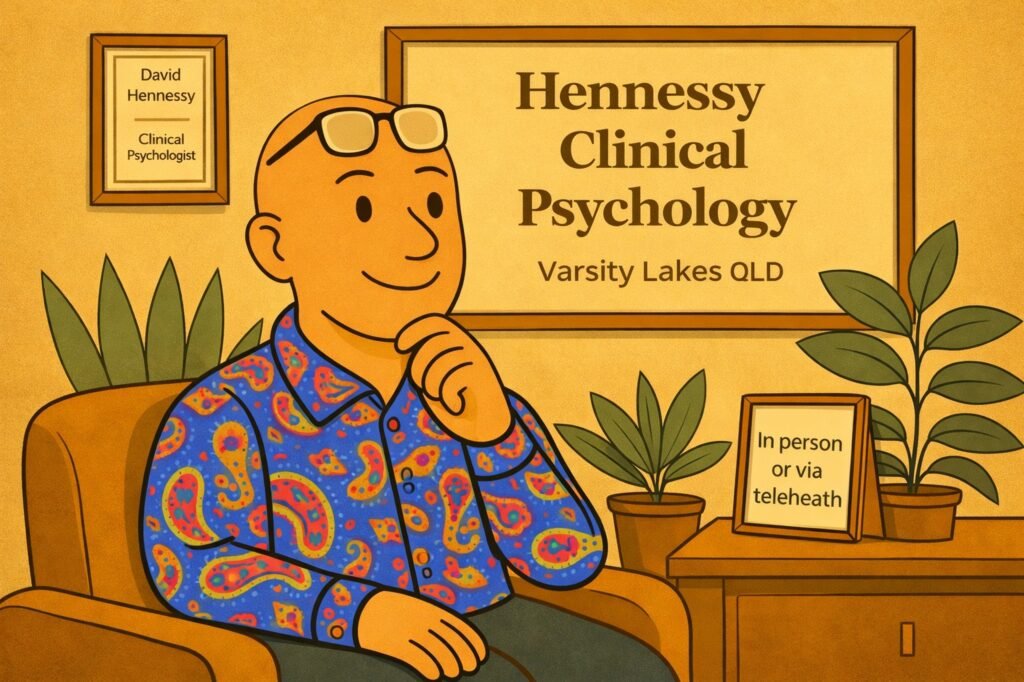
We are a Gold Coast Clinical Psychologist clinic conveniently positioned in Varsity Lakes. Therapy is available in person at Varsity Lakes or anywhere in Australia via telehealth.