
What Is Functional Neurological Disorder FND
By David Hennessy, Clinical Psychologist
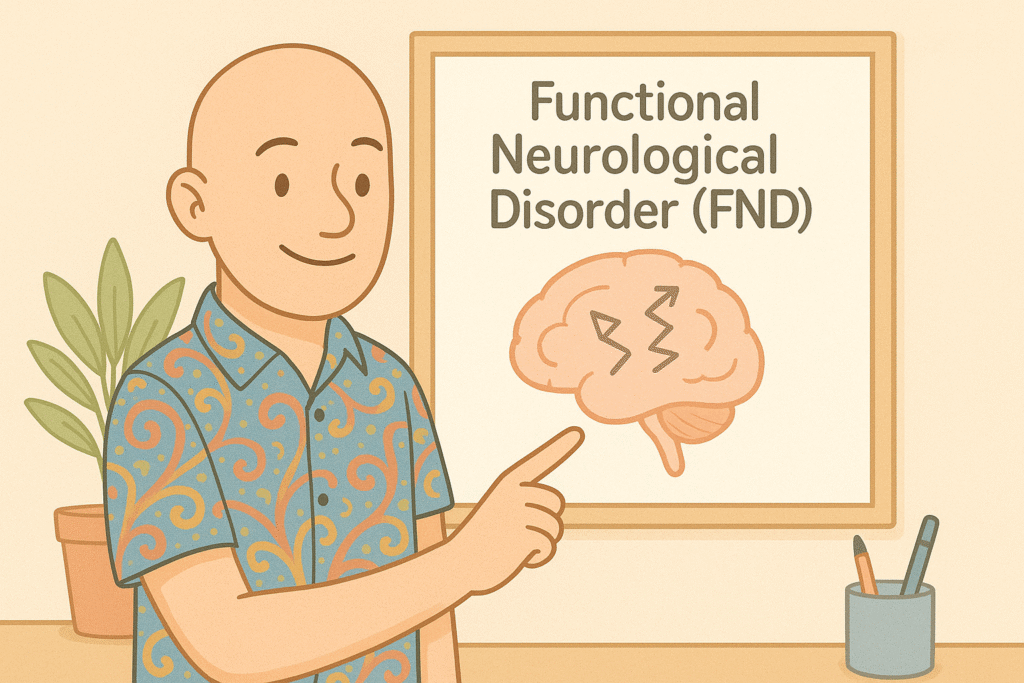
Functional Neurological Disorder is a condition in which a person experiences genuine neurological symptoms, such as movement difficulties, sensory disturbances, or seizure-like episodes, that do not arise from structural injury or disease of the brain. Research shows that FND involves changes in the way different brain networks communicate, rather than damage to those networks. These symptoms are real, often distressing, and deserve the same seriousness as any other health condition [1][2].
Across my work in psychology, counselling, and even during my earlier years in the trades, I have seen how people try to make sense of symptoms that feel frightening or confusing. A clear and respectful explanation often helps reduce fear and gives people confidence to move forward.
FND occurs when the usual processes that support movement, sensation, attention, and bodily awareness become disrupted or misdirected. This is why a person can experience neurological symptoms even when scans such as MRI or EEG show no structural abnormality [3].
Common Symptoms of Functional Neurological Disorder
- Movement difficulties such as tremors, spasms, limb weakness, or changes in walking patterns [1][4].
- Sensory changes, including altered vision, numbness, tingling, or changes in hearing.
- Seizure-like episodes, also known as functional or dissociative seizures, resemble epileptic seizures but occur without abnormal electrical activity [3].
- Cognitive and communication changes, such as difficulties with attention, memory lapses, fatigue, or changes in speech.
Why Does FND Occur
FND reflects a complex interaction between brain network functioning, psychological processes, and environmental stressors. In FND, the automatic systems that coordinate movement and sensory processing can become overactive or misdirected, leading to symptoms that feel involuntary or outside conscious control [1][2].
The symptoms are not imagined or deliberate. They come from changes in functional brain activity and can be as disabling and significant as symptoms caused by structural illness [2].
Some individuals find that stress or trauma increases symptoms, while others do not. People from all backgrounds and with different life histories can experience FND.
Diagnosis and Treatment
Diagnosis is based on identifying positive clinical signs of FND and providing a clear, supportive explanation. FND should not be diagnosed only by excluding other conditions. Early and confident diagnosis improves engagement and reduces fear [1][3].
Best practice guidelines support an integrated approach that may include:
- Specialised physiotherapy that focuses on retraining natural and automatic movement patterns and reducing overattention to symptoms. This approach improves mobility and reduces disability and is different from standard physiotherapy [4].
- Psychological support, including Cognitive Behavioural Therapy, trauma-informed therapy, and approaches that help regulate attention and body awareness. These support people to understand their symptoms and regain confidence in everyday functioning [1][3].
- Multidisciplinary care that brings together neurologists, physiotherapists, psychologists, occupational therapists, and general practitioners. This collaborative approach improves outcomes and reduces unnecessary investigations [1].
- Support for functional seizures through clear explanation and access to psychological and rehabilitative treatment to reduce distress and support recovery [3].
Prognosis varies. Many people experience meaningful improvement, especially with early diagnosis and access to specialised treatment. Others continue to experience symptoms and benefit from strategies that support quality of life, reduce distress, and help with daily functioning [2][4].
Living With Functional Neurological Disorder: A Holistic Perspective
Living with FND can affect a person’s confidence, sense of identity, relationships, and independence. A supportive and holistic approach respects the complexity of the condition and the lived experience of each individual.
Across years of clinical work, counselling, and my earlier time in the trades, I have learned that people cope best when explanations are clear, expectations are realistic, and support is tailored to their needs. When people feel understood and included in their treatment, they often begin to regain trust in their bodies and a sense of steady direction in their lives.
Enquiries and Appointments
https://hennessyclinicalpsychology.com/contact/
References
- Espay, A. J., Aybek, S., Carson, A., et al. (2018). Current concepts in diagnosis and treatment of functional neurological disorders. JAMA Neurology, 75(9), 1132 to 1141. https://doi.org/10.1001/jamaneurol.2018.1264
- Perez, D. L., Edwards, M. J., Nielsen, G., Kozlowska, K., Hallett, M., LaFrance Jr, W. C., et al. (2021). A decade of progress in motor functional neurological disorder. Journal of Neurology, Neurosurgery and Psychiatry, 92(6), 668 to 676. https://doi.org/10.1136/jnnp-2020-323953
- Bennett, K., Alpert, C., & Thompson, S. (2021). A practical review of functional neurological disorder for clinicians. Neuropsychiatry and Clinical Neurosciences, 33(2), 65 to 73.
- Nielsen, G., Stone, J., Matthews, A., et al. (2015). Physiotherapy for functional motor disorders. Journal of Neurology, Neurosurgery and Psychiatry, 86(10), 1113 to 1119.
- Mavroudis, I., Ganos, C., Vemmos, K., et al. (2024). Understanding functional neurological disorder. International Journal of Molecular Sciences, 25(8), 4470.