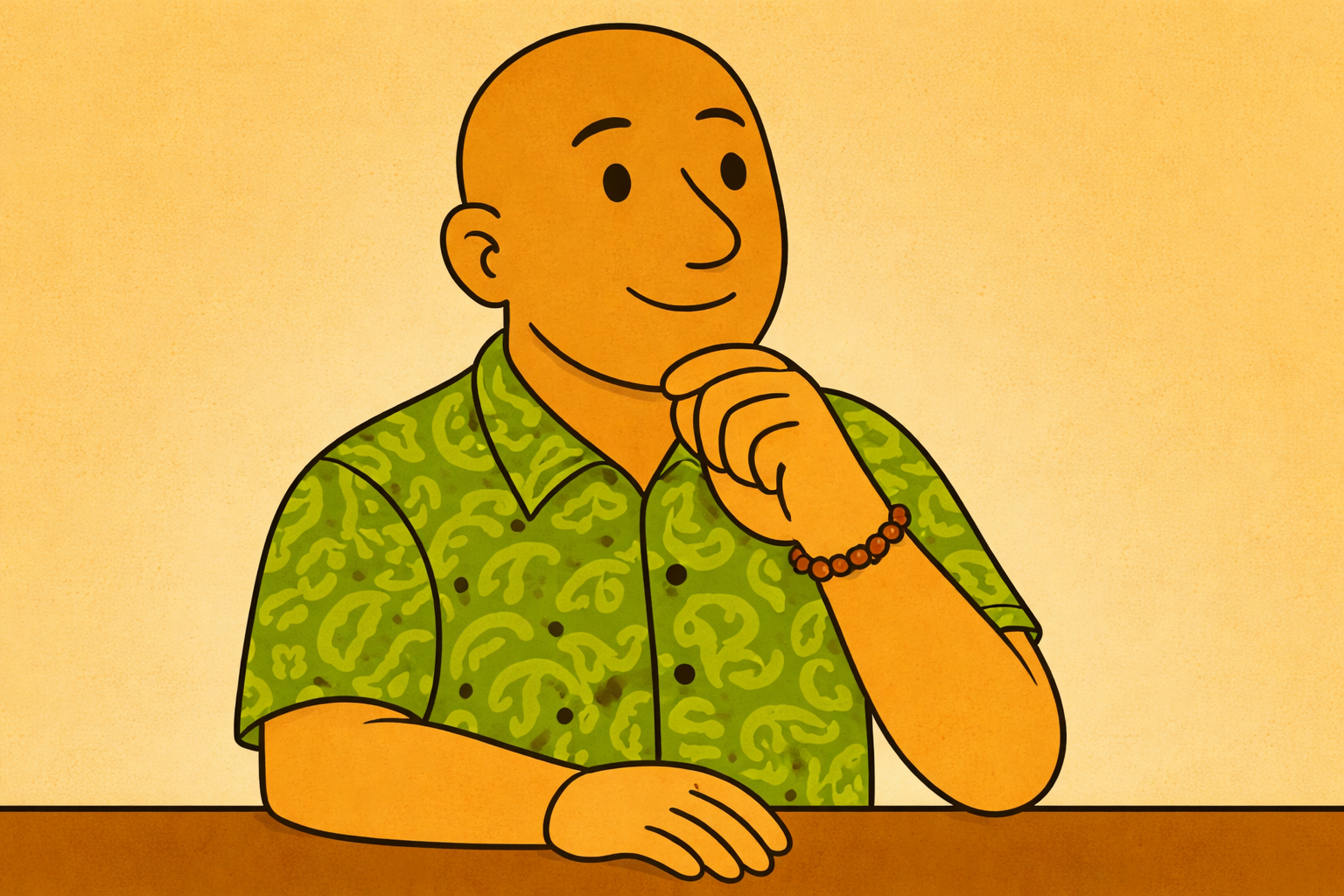
Balancing the Happy and Crappy: Supporting Participants and Their Service Providers With Reliable Person Centred Care
By David Hennessy, Clinical Psychologist
The typical human experience involves a constant process of ease and difficulty sitting side by side. Most people move through moments that feel manageable and moments that feel much less manageable. This experience is usually amplified for people living with chronic disabling health conditions. Therapy often supports people as they hold and manage both parts of their experience.

Balance Happy and Crappy is a lighthearted way of describing this everyday reality. At Hennessy Clinical Psychology, I support participants and the teams around them through practical, collaborative, and evidence-based care. My role is to help individuals develop coping strategies, strengthen functional capacity, and maintain a grounded sense of self. This is the heart of helping someone Balance Happy and Crappy in a real-life way.
My earlier years in the trades, combined with years in counselling and clinical psychology, help me relate to a wide range of people. Many participants living with psychosocial disability, long-term trauma, chronic illness, or complex psychiatric presentations describe their days as a blend of progress and challenge. Capacity-building therapy helps individuals find a steadier footing within this complex mix.
What We Offer Participants
- Complex trauma and post-traumatic stress
- Schizophrenia, bipolar conditions, and other long-term psychiatric presentations
- Persistent pain and living with chronic illness
- Grief, loss, and major life transitions
- Anxiety, OCD, and phobias
- Adult presentations of autism and ADHD
Sessions are grounded in collaboration and practical direction. Each participant receives support that encourages recovery, self-direction, and meaningful participation in daily life. This naturally encourages their own way of balancing Happy and Crappy.
A Supportive Option for NDIS Participants
I support both plan-managed and self-managed participants with:
- Individual therapeutic support
- Capacity building and daily living skills
- Collaboration with support teams
- Comprehensive and timely reporting
- Care delivered with respect and compassion
Capacity building psychology focuses on strengthening functioning in everyday life. This includes collaboratively building self-understanding, emotional regulation, communication, daily structure, problem-solving, and participation in home and community settings.
Therapeutic Approaches That Help Participants Balance Happy and Crappy
Therapy is guided by current evidence and delivered through trauma-informed, person-centred approaches, including:
- Schema informed therapy[1]
- Cognitive Behaviour Therapy[2]
- Acceptance and Commitment Therapy[3]
- Mindfulness and distress tolerance strategies[4]
- Dialectical Behaviour Therapy skills[5]
- Interpersonal Therapy[6]
Therapeutic flexibility is supported across disability and long-term health contexts. Evidence shows that adaptive therapeutic approaches can strengthen engagement and outcomes for people with psychosocial disability, intellectual disability, communication support needs, and long-term psychiatric conditions[7][8][9][10]. This supports each person in working toward their own version of balancing the Happy and the Crappy in daily life.
About David Hennessy – Clinical Psychologist
I bring experience across public mental health, private practice, and the NDIS. My earlier work in the trades and community settings helps me connect with people who may have felt uneasy or overlooked in other services.
I value rapport, dependability, and practical strategies that support real-life change. Many participants describe feeling safe, understood, and able to move at a pace that suits their circumstances. This forms the basis for finding more balance between moments of ease and discomfort.
Enquiries and Appointments
For referrals or questions, please visit:
https://hennessyclinicalpsychology.com/contact/
References
- Australian Institute of Health and Welfare. (2022). Disability in Australia. https://www.aihw.gov.au/reports/disability/disability-in-australia
- National Disability Insurance Agency. (2024). Psychosocial disability. https://www.ndis.gov.au/understanding/how-ndis-works/psychosocial-disability
- Mavromaras, K., Moskos, M., & Mahuteau, S. (2018). Evaluation of the NDIS. Australian Journal of Social Issues, 53(4), 347 to 365. https://doi.org/10.1002/ajs4.59
- Foley, K., Attrill, S., McAllister, S., & Brebner, C. (2021). Individualised funding and allied health. Disability and Rehabilitation, 43(21), 3021 to 3030. https://doi.org/10.1080/09638288.2020.1725157
- Hemmings, C., Deb, S., Chaplin, E., Hardy, S., & Mukherjee, R. (2014). Intellectual disability and mental health care. International Journal of Clinical Practice, 68(5), 508 to 524. https://doi.org/10.1111/ijcp.12368
- Clarke, M., & Wilkinson, R. (2007). Communication difficulties and participation. International Journal of Language and Communication Disorders, 42(5), 467 to 487. https://doi.org/10.1080/13682820601051890
- O’Hara, J., McCarthy, J., & Bouras, N. (2010). Mental health and intellectual disability. Advances in Psychiatric Treatment, 16, 208 to 215. https://doi.org/10.1192/apt.bp.107.004358
- Slade, T., Johnston, A., Oakley Browne, M., Andrews, G., & Whiteford, H. (2009). Disability burden of mental disorders. Australian and New Zealand Journal of Psychiatry, 43(10), 923 to 939. https://doi.org/10.1080/00048670903179103
- Hielscher, E., Waghorn, G., Hobbs, M., et al. (2021). Employment and psychosocial disability. Psychiatry Research, 304, 114135. https://doi.org/10.1016/j.psychres.2021.114135
- Kavanagh, A., Dickinson, H., & Carey, G. (2023). Disability and service access. Australian Journal of Social Issues, 58(1), 75 to 94. https://doi.org/10.1002/ajs4.256